
Contemporary bathroom design has moved far beyond purely functional considerations, evolving into a carefully curated space where aesthetics and performance must coexist. Surfaces now play a defining role in shaping the overall atmosphere, influencing how light, space and materials interact.
In this context, porcelain stoneware has emerged as a leading solution, offering exceptional versatility in terms of formats, finishes and visual effects. Its ability to combine refined design with advanced technical properties makes it a key element in creating modern, cohesive and highly durable bathroom environments.
The evolving role of tiles in contemporary bathroom design
Tiles are no longer simply protective surfaces – they have become central to the architectural language of the bathroom. Every choice, from texture to colour, contributes to defining the identity of the space. In contemporary settings, tiles are used to create continuity, highlight volumes and establish visual hierarchies.
Porcelain stoneware stands out for its ability to meet both aesthetic and functional demands. Its low porosity ensures excellent resistance to moisture, making it ideal for environments exposed to constant humidity.
At the same time, its durability guarantees long-term performance without compromising on appearance. Easy maintenance and resistance to wear further reinforce its suitability for modern bathrooms, where practicality must align seamlessly with design ambition.
Surface continuity and spatial perception
One of the most effective strategies in contemporary bathroom design is the creation of visual continuity across surfaces. Using the same material for both walls and floors allows the space to appear more unified, reducing visual interruptions and enhancing the perception of openness.
Large format tiles play a crucial role in achieving this effect. By minimising grout lines, they create smoother, more expansive surfaces that visually enlarge the environment. Within a well-considered bathroom tiles design, this approach helps establish a sense of harmony, where materials, proportions and layout work together to define a cohesive and balanced space.
Material effects shaping bathroom aesthetics
The aesthetic versatility of porcelain stoneware is one of its most compelling advantages. Through advanced manufacturing technologies, it can replicate a wide range of natural materials with remarkable accuracy, allowing designers to explore different stylistic directions without sacrificing performance.
Stone and concrete effects are particularly suited to contemporary interiors, offering a clean, understated look that emphasises simplicity and structure. These finishes create a refined, architectural feel, ideal for minimalist or industrial-inspired spaces.
On the other hand, wood effect porcelain introduces a sense of warmth and softness, balancing the more technical aspects of the material. It provides the visual appeal of natural wood while maintaining the durability and water resistance required in a bathroom setting.
Light, colour and finishes in bathroom tile design
Light plays a fundamental role in shaping the perception of a bathroom, and tile selection has a direct impact on how light is reflected and distributed. Lighter tones are often used to enhance brightness, making the space feel more open and inviting.
Finishes also influence both aesthetics and functionality. Gloss surfaces reflect light more effectively, contributing to a brighter environment, while matt finishes offer a more subdued, contemporary look with improved slip resistance.
Redefining contemporary bathroom spaces with porcelain stoneware
Contemporary bathroom design is increasingly defined by the ability to combine visual coherence, material quality and long-term performance. In this context, tiles are no longer a secondary element, but a key component in shaping the identity of the space. From surface continuity to the choice of finishes, every decision contributes to creating environments that feel both refined and functional.
Porcelain stoneware stands out as a material capable of meeting these demands with precision and versatility. Its wide range of aesthetic possibilities, combined with durability and ease of maintenance, allows for the creation of bathrooms that remain consistent over time, both in style and performance.
Ceramiche Refin, when material becomes the language of architecture
The quality of a space depends not only on architectural composition, but on the ability of materials to support design choices over time. Technical performance, aesthetic consistency, and application continuity have become essential parameters in defining reliable environments, both in residential settings and in high use contexts. In this framework, porcelain stoneware has established itself as a key material, valued for its durability and design flexibility.
Ceramiche Refin, founded in 1962 and part of the Concorde Group, operates within this landscape through a production model based on full in-house control of the manufacturing process. From aesthetic research and technical development to final quality verification, every phase is managed internally, ensuring consistency between concept and finished product.
Sustainability is an integral part of this system. Low impact production technologies, waste recovery, emission reduction, and resource optimization are embedded within the manufacturing process, contributing directly to product reliability and long-term value.
Within the Ceramiche Refin catalogue, collections are developed as design tools rather than simple aesthetic variations. Each proposal is conceived to meet specific architectural requirements in terms of performance, durability, and visual coherence across indoor, outdoor, and contract applications.
OSMOS explores a material driven aesthetic based on controlled imperfection. Subtle tonal variations and natural surface traces create a refined and authentic look, particularly suited to projects requiring visual continuity between interior and exterior spaces.
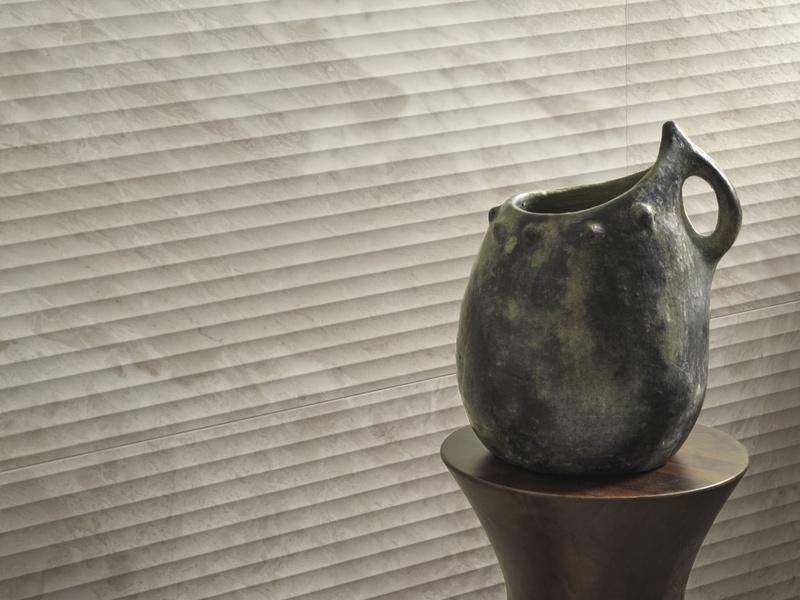
The special project RELIEFS introduces a three-dimensional approach that redefines the role of the wall. Grooves, incisions, and raised geometries interact with changing light conditions, generating dynamic shadow effects that contribute to spatial perception.
PRESTIGIO KALEIDOS focuses on visual variability, with reflections and layered tones that shift depending on light and viewpoint, offering a more decorative yet technically reliable solution.
INK adds a more expressive dimension, where fluid patterns, graphic marks, and a versatile palette allow for distinctive environments while maintaining strong compositional control.
Through its international presence and ongoing dialogue with architects and designers, Ceramiche Refin continues to develop surface solutions that combine industrial precision, aesthetic research, and a forward-looking design vision.
More Stories
Planning a DIY Radiant Barrier Installation in Your Attic
How to keep your bathroom surfaces free from stubborn limescale
When Is a Temporary Roof Repair Useful, and When Is It Only Buying Time?