
What “Aging-in-Place” Means for Outdoor Design
Aging-in-place means designing your home so you can stay in it comfortably, safely, and independently as your needs change. Most people apply this thinking to interior spaces, but it’s just as relevant outside.
This approach is also reflected across residential construction trends in Texas, particularly in barndominiums in San Antonio, where outdoor living spaces such as decks are often integrated into the original home design to support long-term accessibility.
An accessible deck isn’t just a regular deck with a ramp bolted on after the fact. It’s designed from the ground up with universal design principles: spaces that work for everyone, whether you’re 35 or 80, whether you use a walker or nothing at all. The difference shows up in surface texture, clearance widths, railing height, and lighting. These aren’t features you can easily retrofit later without tearing things apart. Planning ahead is always smarter than fixing problems down the road.
Ramps and Entry Points: The First Thing to Address
Steps are the obvious barrier. A single step up to the deck is fine at 45. At 75, with a bad knee or a mobility aid, it becomes a daily obstacle.
The standard for ramp slope comes from ADA guidelines: 1 inch of rise for every 12 inches of length. So if your deck sits 24 inches above ground level, you need a ramp at least 24 feet long. A skilled contractor can zigzag the ramp or work it into the landscape so it looks natural, not clinical.
Width matters too. Thirty-six inches is the minimum, but 42 to 48 inches feels more comfortable, especially if someone uses a wider power wheelchair. Flat landings at both the top and bottom are required, and handrails need to run along both sides. The best results happen when the ramp is treated as part of the design: composite surfaces that match the deck boards, built-in planters along the sides, and railings that look intentional rather than institutional.
Surface Materials That Keep Everyone Safe
Wet decking is a slip hazard for anyone. For older adults or anyone with balance issues, it’s a real risk. The surface material you choose makes a genuine difference.
Composite decking with an embossed or brushed texture performs well in wet conditions. Pressure-treated wood can work too, but it gets slippery over time and needs consistent upkeep. The gap between boards is easy to overlook, but anything over half an inch creates a catch point for cane tips, walker legs, and wheelchair wheels. Tighter spacing is the safer call.
Flush fasteners eliminate small tripping hazards that raised screwheads create. A few additional options worth knowing about:
- Anti-slip rubber strips along high-traffic areas
- Non-slip grip coating on wood surfaces
- Grooved composite boards with built-in traction channels
- Contrasting edge trim to define level changes visually
Small details like these add up to a deck that stays safer through every season.
Railings and Grab Bars: More Than Just Code Compliance
Building code typically requires railings on decks 30 inches or more above grade, set between 36 and 42 inches high. That’s the minimum. For aging-in-place design, the details go further.
The graspable diameter of the handrail matters more than most people realize. A round rail between 1.25 and 2 inches gives a secure, comfortable grip. Flat-top railings that look sleek may not function well for someone who needs to hold on firmly.
Grab bars near entry points and along long stretches of railing add extra confidence. Powder-coated aluminum holds up well outdoors and comes in finishes that blend with the overall design. Stainless steel is another solid option. The goal is to make the deck feel safe without looking like a medical facility. A grab bar next to the gate or beside the stairs can look clean and intentional if it’s part of the design from the start.
Layout and Clearance: Designing for Wheelchairs and Walkers
Space planning is where a lot of decks fall short. Narrow walkways and crowded furniture make a deck difficult to navigate for anyone using a mobility aid.
Standard walkways should be at least 36 inches wide, and 48 inches is a more comfortable target. For wheelchair users, a turning radius of 60 inches needs to be factored into the layout near doorways and at the ends of long runs. That’s five feet of open space to make a full turn.
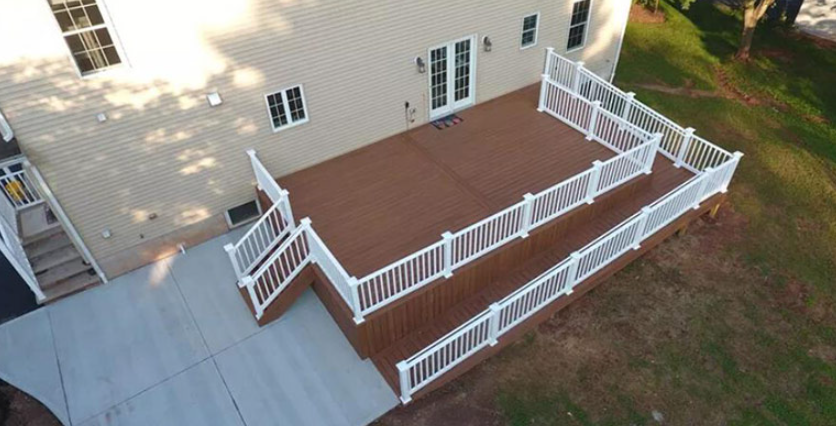
Chair-height seating works better than bar-height for most older adults. Built-in benches at standard seat height (17 to 19 inches) with armrests are a practical and good-looking solution. Multi-level decks need ramps or gradual transitions between levels, not just steps. Experienced deck builders plan these connections into the original layout, with proper landings at every level change, so the whole space stays usable as needs evolve.
Lighting and Visibility Features
Eyesight changes as we age, and low-light conditions become more hazardous over time. Good deck lighting is not optional for an aging-in-place design.
Low-level lighting along the perimeter and beside any step changes makes a real difference after dark. Motion-sensor lights near entry points respond automatically and don’t require searching for a switch in the dark. Contrasting edge trim along level changes helps define the space visually, even during the day. A lighter-colored edge against a darker deck board catches the eye and signals a change in elevation. It’s a simple detail with real safety value.
Smart Add-Ons Worth Planning For
A few upgrades are worth building in from day one, even if they’re not immediately needed:
- Raised planter beds at 28 to 36 inches high, accessible for gardeners who can’t bend easily
- Built-in seating with armrests, which makes standing up significantly easier
- Pergola or retractable awning to reduce heat exposure and fatigue in summer
- Electrical outlets positioned at 18 to 48 inches, reachable for fans, medical devices, and lighting
- Reinforced framing designed to support a future platform lift, which avoids a costly rebuild later
That last one is easy to skip, but retrofitting a lift onto a deck that wasn’t built to support it is expensive and sometimes not structurally possible at all.
How to Talk to Your Deck Builder About Accessibility
Not every contractor has experience with aging-in-place design. It’s worth asking directly. Look for someone with CAPS certification, which stands for Certified Aging-in-Place Specialist, a credential from the National Association of Home Builders that covers accessible design for older adults.
When you talk through the project, frame it in two layers: what you need today and what you might realistically need in 10 to 15 years. A contractor who thinks long-term will ask the right questions and plan with those future needs in mind.
If specific mobility or health conditions are involved, working with an occupational therapist alongside your contractor helps. OTs understand how physical limitations affect everyday movement and can flag things a builder might not think to consider. Make sure the final contract spells out materials, dimensions, and all accessibility-specific features in writing.
Your Deck Should Work for Everyone
An accessible deck isn’t a compromise. Wider walkways, slip-resistant surfaces, thoughtful lighting, and smart layout decisions make the space more comfortable for every guest, not just older adults. It’s the kind of design that ages well alongside the people who use it. If you’re building new or planning a renovation, this is the right time to get it right.
More Stories
Planning a DIY Radiant Barrier Installation in Your Attic
How to keep your bathroom surfaces free from stubborn limescale
When Is a Temporary Roof Repair Useful, and When Is It Only Buying Time?