
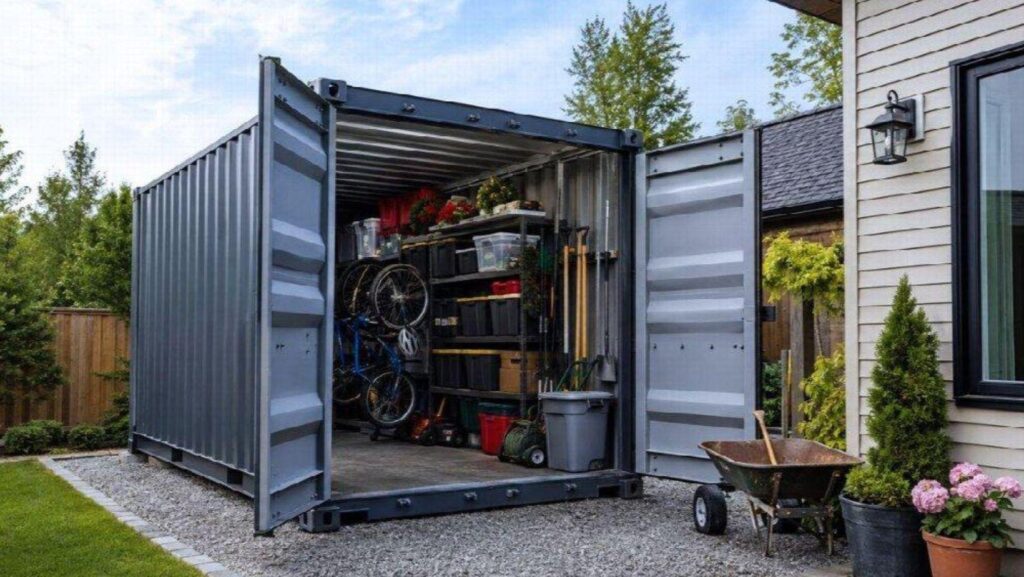
Running out of storage space at home can happen quickly. Seasonal decorations, tools, lawn equipment, furniture, sporting gear, and household supplies can slowly fill garages, basements, and spare rooms until useful living space starts disappearing.
A shipping container offers a different approach. Instead of building a permanent shed or renting storage across town, you can place a secure steel container on your property and keep your belongings close to home.
Shipping containers are durable, spacious, and available in several sizes and conditions. With the right preparation, they can provide practical home storage for years.
Why Shipping Containers Work Well for Home Storage
Shipping containers are designed to protect cargo during long journeys through harsh environments. Their steel construction makes them far stronger than most basic backyard sheds.
A container can protect stored belongings from rain, wind, pests, and unauthorized access when it is properly maintained. Cargo doors can also be secured with heavy-duty locks or lockboxes for added security.
Another major advantage is storage capacity. A 20-foot container provides about 160 square feet of floor space, while a 40-foot container offers approximately 320 square feet.
Unlike a traditional storage unit, your belongings remain on your property. You can access tools, furniture, equipment, or seasonal items whenever you need them without driving to another location.
Choosing the Right Shipping Container Size
For many homeowners, a 20-foot shipping container provides a good balance between storage space and property footprint. It is large enough for household furniture, lawn equipment, bicycles, holiday decorations, and boxes while still fitting on many residential lots.
A 40-foot container makes sense for larger storage needs. Homeowners completing renovations, storing business inventory, or clearing several rooms may benefit from the additional space.
Smaller containers may also be available in 10-foot sizes. These can work well when space is limited or when you only need storage for tools, gardening supplies, recreational equipment, or seasonal household items.
Before buying a container, measure the proposed location carefully. Remember to leave enough open space around the cargo doors so they can swing completely outward.
Understanding Container Condition and Grades
Shipping containers are sold in several different conditions, and you may not need the most expensive option for basic household storage. Understanding container grades can help you avoid paying for features you do not need.
Wind and water tight containers are often suitable for general storage when appearance is not a major concern. They may have dents, scratches, surface rust, or other cosmetic wear but should still provide a sealed storage environment.
Cargo worthy shipping containers are used containers that meet standards allowing them to transport cargo. For homeowners, they can offer a useful combination of structural condition, durability, and value.
Newer containers can be attractive when appearance matters or you want minimal previous wear. The best choice depends on your budget, storage plans, property visibility, and how long you expect to use the container.
Considering a Newer Container
Some homeowners prefer a cleaner container that blends more easily into a well-maintained residential property. Newer units generally have fewer dents, less surface wear, cleaner interiors, and newer door seals.
Many so-called new containers have made one loaded overseas trip before being sold. If you are searching for new one trip containers for sale, pay attention to the container's dimensions, door configuration, paint condition, flooring, and available modifications.
A newer container can make sense if you plan to keep it for many years. It may also require less cosmetic work before installation, particularly if the container will remain visible from your house, driveway, or backyard.
Preparing Your Property for Delivery
A shipping container needs a stable, level location. Placing it directly on uneven or soft ground can cause the frame to shift, which may eventually make the cargo doors difficult to open and close.
Common foundations include compacted gravel, concrete blocks, railroad ties, or concrete pads. The goal is to support the container evenly while allowing drainage underneath and around the structure.
You should also think about the delivery route before ordering. Delivery trucks need enough width, height, and maneuvering room to reach the placement area safely.
Look for trees, fences, power lines, gates, septic systems, landscaping, and tight corners that could interfere with delivery. Discussing the site with the container company before delivery can prevent expensive surprises.
Organizing the Interior Efficiently
A shipping container gives you a large open room, but organization determines how useful that space becomes. Simply stacking boxes from floor to ceiling can make retrieving anything from the back frustrating.
Install freestanding shelving or wall-mounted storage systems to keep smaller items organized. Heavy items should remain low, while lighter boxes and seasonal supplies can be placed higher.
Leave a central walkway whenever possible. You should be able to reach the rear of the container without unloading half of your belongings first.
Labeling containers and grouping similar items together can also save time. Garden supplies, tools, holiday decorations, camping equipment, and household furniture can each have designated zones.
Managing Moisture and Ventilation
Steel containers are weather resistant, but interior condensation can still become a concern. Temperature changes can cause moisture to collect inside, especially when humid air becomes trapped.
Ventilation can help regulate airflow. Louver vents, turbine vents, or other ventilation systems may be added depending on your climate and the items being stored.
You can also use moisture absorbers or dehumidification equipment for belongings that are more sensitive to humidity. Furniture, documents, clothing, electronics, photographs, and certain collectibles may require additional protection.
Avoid placing wet lawn equipment, damp furniture, or recently washed items inside. Introducing unnecessary moisture can increase the risk of mold, odors, and corrosion.
Improving Security
One of the biggest advantages of container storage is the strength of the cargo doors. Still, the quality of your locking system matters.
Heavy-duty padlocks designed for shipping containers can make forced entry more difficult. Lockboxes can provide another layer of protection by shielding the lock from bolt cutters and other tools.
For higher-value belongings, homeowners may add motion lights, cameras, or alarm sensors near the container. Placing the unit in a visible area of the property may provide additional deterrence.
Keep an inventory of valuable items stored inside as well. Photos and records can be helpful for organization and insurance purposes.
Checking Local Rules Before Placement
Before having a container delivered, research the rules that apply to your property. Cities, counties, homeowners associations, and neighborhood agreements may have requirements regarding container placement.
Some areas may limit where containers can be located or how long they can remain on residential property. Setback requirements, screening rules, permits, and appearance standards can also apply.
It is much easier to confirm these details before delivery than to relocate a container later. A quick conversation with your local planning department can help clarify what is allowed.
Making a Container Look Better at Home
A shipping container does not have to look industrial forever. Simple exterior improvements can help it fit more naturally into a residential setting.
Painting the container to match your home, garage, fence, or landscaping can dramatically change its appearance. Homeowners can also use shrubs, fencing, decorative screens, or other landscaping features to reduce visibility.
More elaborate projects may include siding, a small roof structure, exterior lighting, or customized doors. Just make sure any modification does not create drainage problems or interfere with ventilation.
Is a Shipping Container Right for Your Storage Needs?
Shipping container storage works especially well for homeowners who need substantial space and want direct access to their belongings. It can provide a long-term alternative to filling a garage, building a large shed, or continually paying for an off-site storage unit.
The key is choosing the right container and preparing the site correctly. Size, condition, foundation, ventilation, security, delivery access, and local regulations should all be considered before making a purchase.
With thoughtful planning, a shipping container can become a dependable extension of your home's storage space. Instead of letting clutter take over valuable rooms and garages, you can create a secure, organized storage area just a few steps from your door.
More Stories
When Could Sustainable Packaging Change Consumer Preferences For Mylar Magic?
Modern Recliner Sofas for Comfortable and Practical Living Rooms
How to Read a Kratom Lab Report Against the Proposed 7-OH LimitsGloved hands using a micropipette to spot a sample onto a thin-layer chromatography plate in a lab