
There’s a stain on the guest room ceiling about the size of a quarter. Faint brown, slightly darker at the edges. It hasn’t grown in weeks, nothing’s dripping, and the guest room barely gets used anyway.
So you leave it. Everybody does. You’ll deal with it in spring, when the weather’s better and money’s less tight and you’ve got a free Saturday.
Here’s the uncomfortable part: that stain isn’t a problem you’re postponing. It’s a problem that’s compounding. The water didn’t stop when the visible dripping stopped — it just moved into materials that don’t show you what’s happening to them. And the price of dealing with it isn’t sitting still while you wait.
What the Bill Looks Like Over Time
Talk to anybody who does this work and you’ll hear roughly the same arc.
Catch it in the first week or two, and you’re usually looking at a targeted fix — a section of flashing, a handful of shingles, sealing a penetration. A few hundred dollars in most cases. It’s a couple hours of work on a specific spot.
Let it run a month and the number climbs into the high hundreds or low thousands. Now there’s staining that needs addressing, insulation that’s been sitting wet, and possibly the first mold activity in the cavity.
Three months in, you’re in different territory entirely. Sheathing starts to soften. Framing members near the entry point show rot. Mold remediation becomes a separate line item with its own contractor. Several thousand dollars is normal here.
Past six months, especially through a full wet season, the conversation shifts to structural repair — replacing sections of roof deck, sometimes rafters, plus everything on the interior side that got ruined along the way. Five figures is entirely possible.
Same leak the whole time. Same hole. The difference is calendar pages.
This is the arithmetic that makes early roof leak repairs so lopsided in your favor — not because the repair itself is cheap, but because everything you avoid paying for later is expensive. The fix costs what it costs. The delay is what gets billed at a multiple.
Why the Damage Accelerates Instead of Creeping
You’d expect damage to be roughly linear. Twice the time, twice the harm. It doesn’t work that way, and understanding why makes the whole thing less abstract.
Wood loses strength as it stays wet. Not immediately — sheathing handles a soaking and dries out fine. But wood that never gets a chance to dry starts breaking down at a cellular level. Fasteners lose their grip. Panels soften. What was a wet spot becomes a section that fails under load.
Insulation is worse. Fiberglass batts that get saturated mat down and stay compressed even after drying. They stop insulating. You’ve now got a cold spot in the assembly, which encourages condensation, which adds moisture the roof leak didn’t even supply.
Mold needs almost nothing to start — moisture, moderate temperature, organic material to feed on. Give it a day or two under the right conditions and colonies establish. Once they’re in the cavity, cleaning them out is specialized work, not a matter of wiping a surface.
And water spreads. It follows the slope of the deck and travels along rafters, wetting material far from where it came in. Every week the wetted zone gets a little wider. The area needing repair grows even when the leak itself doesn’t.
The Costs That Never Show Up in the Repair Quote
When people budget for a leak, they picture the roofer’s invoice. That’s often the smallest part.
Mold remediation is its own trade with its own pricing. Insulation replacement in the affected bays. Drywall — cutting out, replacing, taping, texturing, priming, painting, and then repainting adjacent surfaces so the patch doesn’t stand out.
Whatever was stored under it. Boxes, furniture, seasonal stuff in the attic. Nobody thinks about this until they open the bins.
Heating and cooling costs, which climb quietly when insulation stops working and nobody connects the dots.
And the one that catches sellers off guard: an inspection report. Evidence of long-term water intrusion in an attic becomes a negotiating lever the moment you list. Buyers discount hard for anything involving the words rot or mold, usually well beyond what the repair actually costs.
The Insurance Clock Nobody Mentions
This is where waiting hurts most, and almost nobody knows it going in.
Homeowners policies are generally built to cover sudden, accidental damage. A storm rips shingles off, water gets in — that’s the kind of event coverage exists for. What policies typically exclude is damage from lack of maintenance or from a problem the owner knew about and let continue.
That distinction is decided by evidence. An adjuster looking at an attic can tell the difference between water that arrived last week and staining that’s been layering for two seasons. Ring patterns, mold maturity, wood discoloration — it’s all readable.
So the longer a known leak runs, the weaker your claim gets. You can end up in the situation where storm damage genuinely caused the leak, but the delay in addressing it is what gets cited in the denial.
What helps: dates and photographs from the day you first noticed anything. A written assessment from a contractor documenting cause and condition. Records of when you reported it and what was done. Coverage terms vary a lot by policy and by carrier, so read yours rather than assuming — but move quickly regardless, because speed is the one variable you control.
Why You Can’t Find It Yourself
The instinct is to go up, look for the hole above the stain, and seal it. This almost never works, for a reason that’s purely geometric.
Water enters at a high point and runs downhill along whatever surface it lands on — the underside of the deck, the top of a rafter, a run of ductwork. It travels until something interrupts it. Where it finally drops through the ceiling can be many feet from where it came in, sometimes on a different side of the room.
Which means the spot directly above your stain is frequently intact. Seal it and you’ve accomplished nothing except making yourself feel better for a few weeks.
Finding the actual entry point means tracing the water backward, usually in the attic, often during or right after rain, sometimes with moisture meters or thermal imaging that reads temperature differences in wet material. That’s the diagnostic half of the job, and it’s the half people skip.
The Two-Step Reality of Emergency Repair
Something worth knowing before you call anyone during a storm: no competent contractor is doing a permanent repair on a wet roof in bad weather.
Not because they don’t want your money. Because sealants and adhesives don’t bond to wet surfaces, shingles can’t be installed properly in cold or rain, and standing on a soaked pitched roof in wind is how people get seriously hurt.
So real emergency response is two visits. First, stop the water — tarping the affected area, temporary sealing, containing what’s already inside. Fast, relatively cheap, buys you time. Second, the actual repair once the surface is dry and safe, which is when the permanent materials go in and the warranty starts.
If someone promises a full permanent fix mid-storm, that tells you something about the work you’re going to get.
Signs That Change the Timeline
Call immediately. A ceiling that’s sagging or bulging — that’s trapped water with real weight, and it can come down. Active dripping. Water anywhere near light fixtures or wiring. A stain visibly spreading while you watch.
Within a day or so. Brown or yellow staining that’s grown since last time you looked. Musty smell in a room or the attic. Paint bubbling or peeling on a ceiling or upper wall. Any visible mold.
Schedule a look. Small spots that haven’t changed. Damp smell only in humid weather. Missing or lifted shingles you can see from the ground. Shingle granules collecting in the gutters.
That last one gets ignored constantly. Granules in the gutter means the protective surface is wearing off the shingles above — the leak hasn’t happened yet, but the countdown started.
What Ten Minutes a Season Actually Prevents
Take a flashlight into the attic after the first heavy rain of each season. Look at the underside of the deck for dark patches, and at the insulation for spots that look flattened or discolored. That’s most of the inspection right there.
Clear the gutters twice a year. Backed-up water sits against the roof edge and works its way under the shingles, which is one of the more common ways leaks start with no dramatic weather event at all.
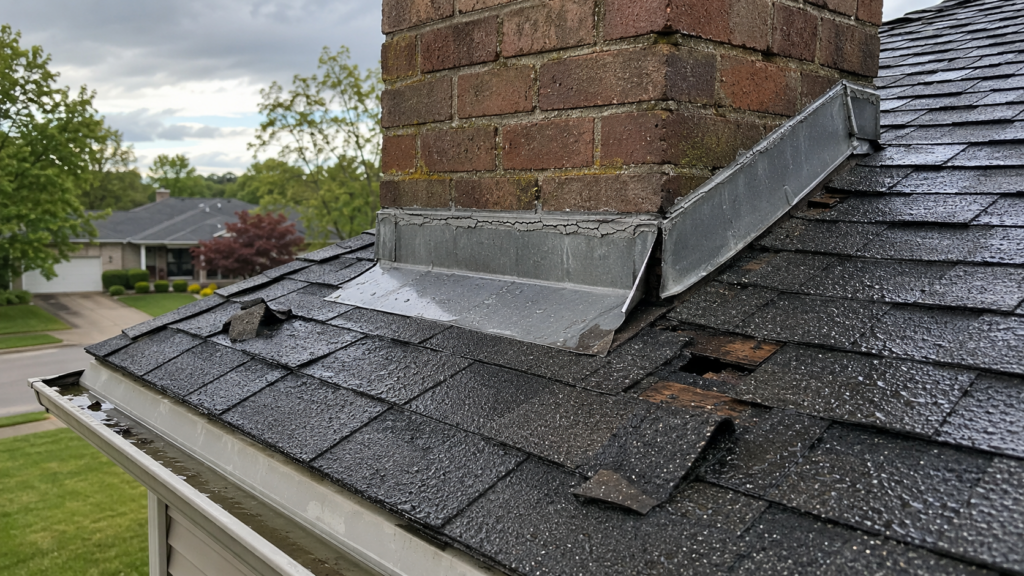
Look at the flashing where anything penetrates the roof — chimney, vent stacks, skylights. Cracked sealant or lifted metal at those junctions is where a huge share of leaks begin.
Walk the perimeter after a windstorm and look up. Missing shingles are visible from the ground if you actually look.
None of this takes long. The stain on the guest room ceiling took months to appear and will cost real money either way — the only open question is which number on the timeline you end up paying.
More Stories
When Could Sustainable Packaging Change Consumer Preferences For Mylar Magic?
Modern Recliner Sofas for Comfortable and Practical Living Rooms
How to Read a Kratom Lab Report Against the Proposed 7-OH LimitsGloved hands using a micropipette to spot a sample onto a thin-layer chromatography plate in a lab