
Your yard is supposed to be tilted. Not by much. The International Residential Code asks for the soil around a house to fall at least six inches over the first ten feet, a slope you’d never notice standing on it. Water notices.
That quiet little hill does a job nobody sees. When it’s there, storms barely register. When it’s missing, you get the greatest hits: mud on the patio, a trench where the hydrangeas used to be, a musty smell in the basement come April. So where does the trouble start? Overhead, mostly.
Where the Water Goes
A roof is a big, slick collector with very few exits. Rain that would have soaked into forty different spots of lawn gets herded to the edge, dropped into the gutter and sent along the trough to a downspout or two. By the time it lands, it’s one concentrated stream, and a concentrated stream moves dirt.
The soil beside the house makes it worse. It’s usually backfill, dug out for the foundation and shovelled back in, so it’s looser than the ground farther out. Looser soil washes.
You’ll spot the signs: a scooped-out patch under each downspout, mulch fanned across the walkway, roots showing like knuckles. And whatever doesn’t wash away sits against the foundation, which is how damp crawl spaces begin.
Your soil type changes the details. Clay is slow to take water in, so it puddles and sheets off. Sand swallows it quickly and then slumps. Pick your poison.
Keep the Path Open
Do this part first. It’s cheap.
Gutters should have someone looking at them twice a year, typically in the spring and autumn, and also after any storm that causes branches to be thrown about. You should go out when it is actually raining at least once (yes, go out in the rain and take a coat with you).
Look out for overflow, drips at the joints, and water staying in the trough rather than flowing along it. Since gutters are supposed to slope towards the downspout, usually by a quarter of an inch for every ten feet, any puddle that doesn’t disappear generally indicates a sag.
Don’t forget to examine the board behind them as well; that is the fascia, and rot tends to hide in that area.
Debris is the boring culprit behind a lot of this. Leaves, shingle grit and those helicopter seeds pack the trough; water takes the shortcut over the front lip, and it lands exactly where you didn’t want it. Guards help.
Professionally installed gutter protection, paired with periodic inspections, is a real part of responsible roof-water management, because it helps prevent debris-related clogs. Performance varies by product, though.
Some gutter guards allow fine grit and pine needles to sneak in, and no guard has any say over where the downspout sends its water. So depending on the type of gutter guard, you may still need to climb up there now and then.
Which brings us to the exits.
The EPA recommends that downspout water should be directed at least five feet away from the house, and if your property slopes towards the walls, I would go even farther than that.
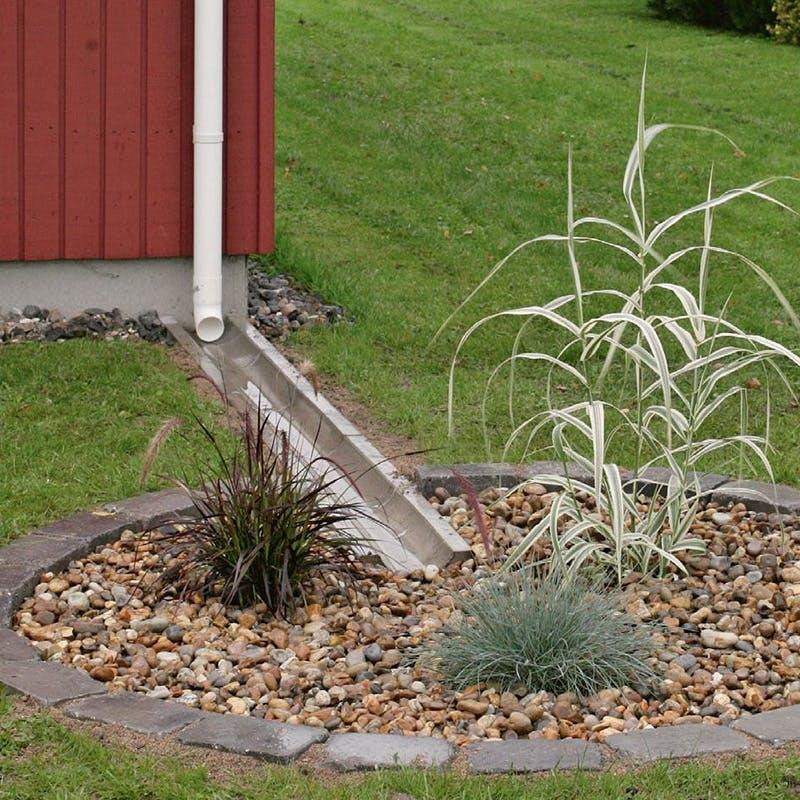
Using an extension is a good solution, as is using a splash block or laying a buried pipe to a pop-up outlet at a lower position.
However, the direction in which you aim the water is important; you should not aim it at the driveway since water flowing over the pavement picks up pollutants and carries them to the storm drain, nor should you aim it at your neighbour.
Before connecting to a sewer, you must contact your local city authorities because in many places such connections are restricted.
Patch It or Replace It
Begin on a small scale since the majority of gutter problems are minor ones. Repair a seam. Replace any loose hangers. Change the cracked elbow. If the board behind is soft, then repair the wood first, as new metal placed on soft wood will come off once more.
Patching has a limit, though, and you’ll know when you’ve hit it. You’re repairing the same stretch every year. Rust is spreading along most of the runs. Whole sections keep peeling away from the house.
At that point, you’re paying a small fee over and over for a system that’s quitting, and quotes for long-term exterior drainage upgrades start looking reasonable, especially since a new setup can be sized for the roof you actually have.
The problem is that delaying necessary replacement or repeatedly patching a failing system can allow water damage to continue
As to which option is cheaper, it all depends on just how much of the system is actually in bad shape, and only by carrying out a thorough inspection from the ground and then from a ladder can you find out more than by guessing.
Let the Yard Help
Do remember that invisible hill? Once it’s disappeared, the gutters won’t be able to recreate it. You should introduce soil that packs well, restore the slope away from the walls, and make sure the soil line is below your siding.
Roots are underestimated. Native plants with deep roots and dense groundcovers slow the flow of water and keep the soil in place, and they are more attractive than bare soil, about which no one complains.
A rain garden is the more mature option; it’s a shallow basin which gathers stormwater and allows it to soak in. The usual recommendation is to place it at least ten feet away from the foundation and never on a slope that is steep above the house.
In the case of heavy clay, the soil should first be improved, so do not think that you can simply dig and plant.
Rain barrels are charming, but most hold only 40 to 70 gallons, and they fill fast. Treat them as a bonus for watering. Route the overflow away from the house, screen the lid against mosquitoes, and empty them between storms.
Season by Season
Spring: Clear the gutters, run a hose through them, and check each downspout exit for fresh erosion.
Summer: Trim branches that hang over the roof. After a heavy rain, walk the yard and note where water stood.
Fall: For uncovered gutters, clean them once the leaves are down. For gutter guards, follow the manufacturer’s maintenance recommendations. Where winters freeze, drain the rain barrels.
Winter: Keep downspout outlets clear, so meltwater has somewhere to go.
Last Word
You don’t have to fix everything this weekend. Next time it rains, walk around the house and watch where the water goes. That’s the whole assignment.
More Stories
The rising cost of construction litigation and how to avoid it
When Could Sustainable Packaging Change Consumer Preferences For Mylar Magic?
Modern Recliner Sofas for Comfortable and Practical Living Rooms