
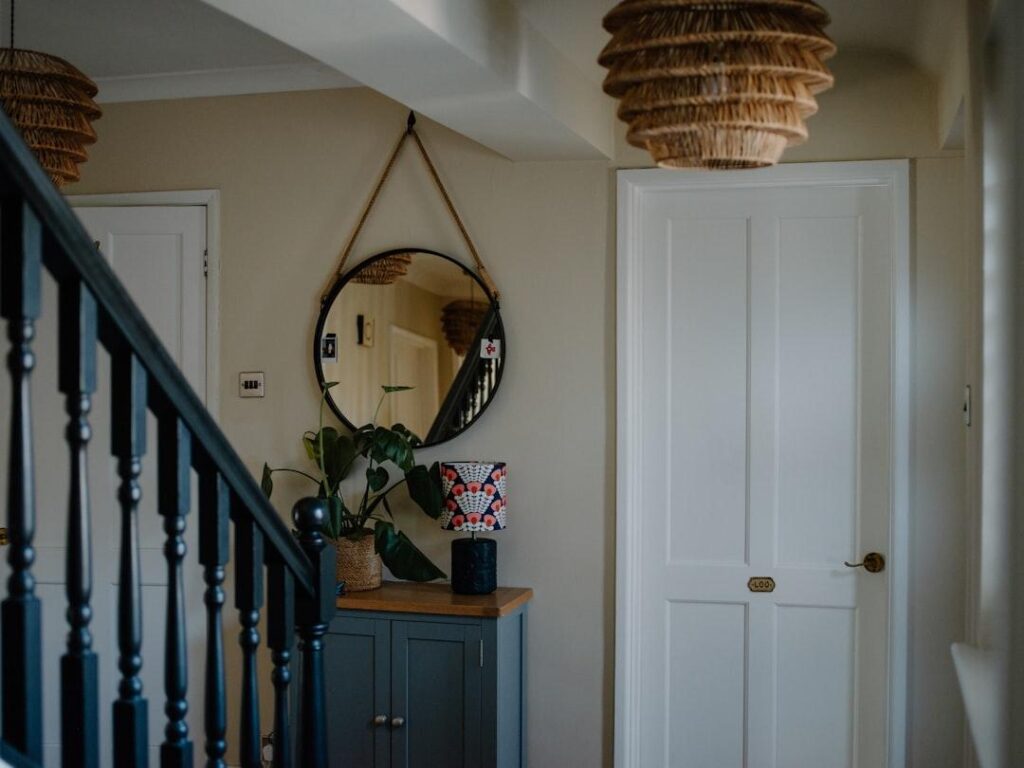
Panel internal doors are the most widely used door style in UK residential properties, characterised by the raised or recessed rectangular sections that break the door leaf into a composition of solid and framed areas. The variety within this category is much wider than many homeowners realise, with options ranging from traditional Victorian-style six-panel designs through to simplified two-panel contemporary versions that suit modern interiors. Choosing the right panel internal doors means understanding how the number of panels, the moulding profile, the material, and the finish each contribute to the overall look of the finished space.
Understanding Panel Door Configurations
The number and arrangement of panels in a door design significantly affects its visual character and its period associations. A six-panel door with two small panels at the top, two tall panels in the middle, and two smaller panels at the bottom is strongly associated with Victorian and Edwardian properties and suits traditional interiors well. A four-panel arrangement with equal-sized panels is slightly more neutral and works across a broader range of property types. A two-panel door, with one panel above and one below a central rail, has a cleaner and more contemporary feel that suits modern interiors or renovated properties where a simplified aesthetic has been applied throughout.
Moulding Profiles and What They Communicate
The moulding profile on a panel door, the shaped detail that frames each panel and creates the visual depth of the composition, is one of the most important factors in how traditional or contemporary the door looks. Ogee mouldings with their S-shaped profile are associated with period and traditional styles and suit Victorian or Georgian properties. Ovolo mouldings with a rounded quarter-circle profile are slightly more neutral and work across a wider range of contexts. Square-edge or chamfered profiles with minimal moulding detail create a more contemporary result and are appropriate for modern or transitionally styled interiors. Matching the moulding profile to the skirting and architrave creates a cohesive and considered finish.
Solid vs Hollow Core Construction
Panel internal doors are available in both solid and hollow-core construction, and the difference has a meaningful impact on weight, acoustic performance, and cost. Hollow-core doors have a cardboard or honeycomb internal structure and outer skins that give the appearance of a panel door but provide little acoustic insulation or physical resistance. Solid-core doors have a timber or composite interior that adds weight and provides meaningfully better acoustic performance, which is important in rooms where noise transmission between spaces is a concern. Solid-core doors are also more resistant to damage from impacts and are better able to hold fixings for wall-mounted items.
Pre-Finished vs Unfinished Options
Panel internal doors are supplied either pre-finished or unfinished, and the choice between the two depends on whether painting or a natural wood finish is the intended outcome. Unfinished or primed doors are designed to be painted and provide a smooth surface that accepts paint well with minimal preparation. Pre-finished options in white or a colour are available and save the time and cost of painting, though the colour range is more limited than what is achievable with a painted finish. Wood veneer and solid timber doors that are intended to show the natural grain are supplied in a sanded or oiled finish that can be enhanced with additional coats of oil, wax, or lacquer after fitting.
Getting the Right Door Height
Standard internal doors in UK properties are typically supplied at a height of 1981 mm, which is the most widely stocked size and suits most standard ceiling heights. However, in rooms with higher ceilings, a standard-height door can look disproportionately small and create an awkward visual relationship with the surrounding architecture. Taller door options at heights of 2040mm, 2100mm, and 2200mm are widely available and create a significantly more imposing and well-proportioned entrance in rooms with ceilings above 2400mm. The additional height also has a practical benefit in making the room feel taller and more generous.
Choosing the Right Door Width
Door width in existing properties is usually determined by the existing frame, and replacement doors are typically specified to the same width as the door being replaced. However, when renovating, extending, or fitting doors in new construction, specifying wider doors than the standard 686mm can significantly improve the usability of doorways throughout the home. A width of 762mm suits most domestic applications comfortably, while 838mm provides meaningful accessibility benefits for households with older occupants or those with mobility considerations. Standard UK door widths are specified in imperial measurements, so it is important to confirm whether the opening dimensions are being discussed in imperial or metric terms when ordering.
More Stories
Planning a DIY Radiant Barrier Installation in Your Attic
How to keep your bathroom surfaces free from stubborn limescale
When Is a Temporary Roof Repair Useful, and When Is It Only Buying Time?