
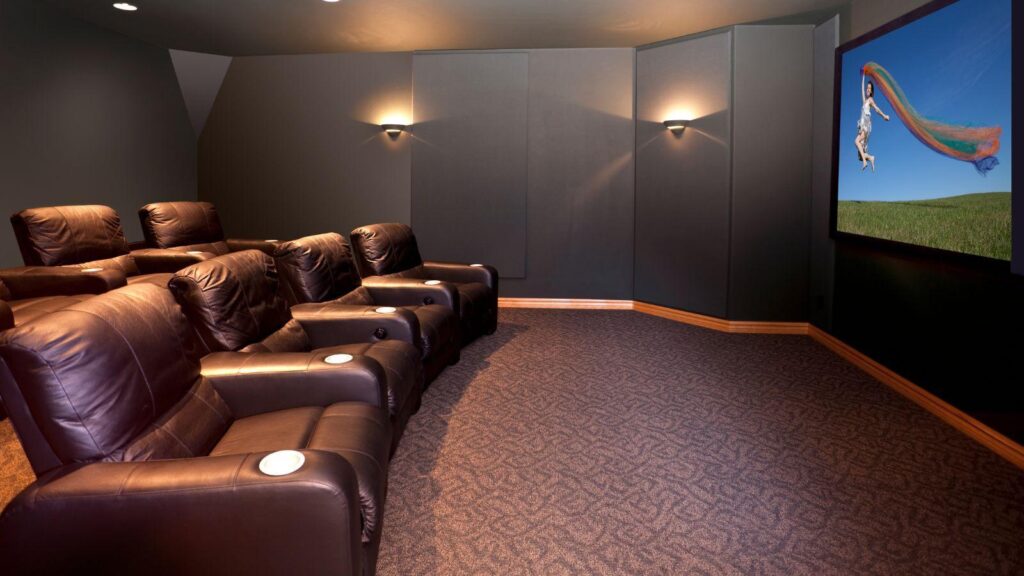
Research first published by orthopedic scientist Alf Nachemson between 1964 and 1970, and still cited in spinal biomechanics literature today, found that reclining the body reduces pressure on the lumbar spine by 50 to 80 percent compared with standing upright, according to a 2023 finite element study on lumbar spine biomechanics published via PMC. That single fact explains a lot about why a good chair can turn a two-hour movie from an endurance test into something genuinely relaxing.
Home viewing has changed a lot over the past decade, and seating is one of the biggest reasons why. Reclining home theater seating has moved from a luxury item to a practical upgrade for anyone who watches films regularly at home, and the reasons go beyond simple comfort.
Why Does Reclining Home Theater Seating Reduce Physical Strain During Long Films?
Reclining reduces strain because it shifts weight off the spine and redistributes it across a larger surface area. A flat couch cushion or dining chair concentrates pressure on the lower back and tailbone, while a reclined position spreads that load more evenly. This lines up with the disc pressure research mentioned above, where reclined postures consistently showed lower spinal load than seated or standing positions.
For anyone who watches a full trilogy or a season of a show in one sitting, this difference adds up. A home theater seating recliner supports the lower back and legs simultaneously, which standard seating rarely does without extra pillows or props.
What Makes Home Theater Recliner Seating Different From a Regular Recliner?
Home theater recliner seating is purpose-built for media rooms, with features a general living room recliner usually skips. Most models include contoured headrests, individual armrests with storage, and a lower profile that keeps sightlines clear to the screen. Standard recliners are built for general use and often sit higher, which can block views in a shared room.
Common features found in dedicated theater recliners:
- Integrated cupholders and side trays
- USB charging ports built into the armrest
- Power recline motors instead of manual levers
- Contoured bucket seats designed for a single viewer
- Optional heating and massage functions
Seat Configuration Matters for Group Viewing
Theater recliners are often sold in rows of two, three, or four connected seats, which keeps everyone at the same eye level. This differs from mixing a couch with individual chairs, where height and angle vary from seat to seat and some viewers end up with a worse view than others.
How Does Leather Recliner Home Theater Seating Compare to Fabric Options?
Leather recliner home theater seating tends to outperform fabric in durability and cleaning, though fabric wins on initial cost and softness. Leather resists spills better, which is relevant given how often snacks and drinks show up during movie nights. Fabric, on the other hand, tends to feel warmer and less slippery during long sitting sessions.
|
Feature |
Leather |
Fabric |
|
Spill resistance |
High |
Low to moderate |
|
Long-term durability |
High |
Moderate |
|
Initial cost |
Higher |
Lower |
|
Warmth in cold rooms |
Cooler to the touch |
Warmer |
|
Maintenance |
Wipe clean |
Requires vacuuming, occasional stain treatment |
Neither material is objectively better across the board. The right pick depends on household habits, especially whether kids or pets share the room regularly.
Why Do Home Theater Seating Recliners Improve Focus During Movies?
Home theater seating recliners improve focus by removing the small distractions that pull attention away from the screen. A stiff back, cold feet, or an awkward neck angle forces constant shifting, which breaks concentration during dialogue-heavy or slow-paced scenes. A properly reclined position keeps the body settled for longer stretches without needing to adjust.
This matters more than it sounds. Viewers who are physically uncomfortable tend to check phones or pause more often, which interrupts pacing and reduces overall enjoyment of the film.
How Do You Choose the Right Reclining Home Theater Seating for a Small Room?
Choosing the right setup starts with measuring the room before looking at any specific chair. Reclining seats need extra clearance behind them to fully extend, and skipping this step is the most common mistake buyers make.
A simple process for sizing a room correctly:
- Measure the distance from the wall to where the seat’s back edge will sit
- Add at least 12 to 16 inches of clearance for full recline extension
- Check whether wall-hugger models are available, since these need less rear clearance
- Confirm doorway width if the chairs need to be moved into a finished basement
- Test the recline angle in person when possible, since comfort varies by body type
Space-saving options worth considering:
- Wall-hugger recliners that slide forward instead of tilting back
- Loveseat-style units that combine two seats in one frame
- Modular sectionals with a reclining end seat only
What Long-Term Value Does Reclining Home Theater Seating Add to a Home?
Reclining home theater seating tends to hold its value better than standard furniture because it serves a specific, in-demand purpose. Homes with a finished media room or dedicated theater space often list this as a selling point, since buyers see it as a completed feature rather than something they need to build themselves.
Beyond resale, the seating gets consistent use across years rather than sitting idle, which is not always true of specialty furniture. A well-maintained leather recliner home theater seating set can last over a decade with basic care.
Does the Recline Angle Affect Neck and Shoulder Comfort Too?
Recline angle affects the neck and shoulders as much as the lower back, though this gets less attention than lumbar support. A headrest set at the wrong angle can push the chin forward or leave the neck unsupported, especially during longer recline positions. Automotive seating research examining spinal alignment at different back angles found measurable differences in cervical and thoracic curvature depending on incline, which suggests the same principle applies to home seating.
Adjustable headrests solve most of this problem, since they let each viewer set the angle to match their own height and posture rather than relying on a fixed factory position.
Settling on the Right Setup for Regular Movie Nights
Comfort, sightlines, and durability all point in the same direction for anyone who watches movies at home on a regular basis. The physical benefits are backed by real spinal research, the room-planning process is straightforward once measurements are taken, and the material choice mostly comes down to household habits rather than one option being universally better. For most households building or upgrading a media space, reclining home theater seating solves more problems than it creates, and the seven reasons above cover why that holds true across comfort, focus, and long-term value.
Frequently Asked Questions
Can reclining home theater seating cause back problems if used incorrectly?
Prolonged use in a poor recline angle without lumbar support can create discomfort over time, so adjustable models that let each viewer fine-tune the angle are generally the safer long-term choice.
Do power recliners require an electrical outlet near every seat?
Yes, most power recline mechanisms need a nearby outlet or a power strip run along the row, which is worth planning for before installation rather than after.
How much weight can a typical home theater recliner support?
Weight capacity varies by model, but most mid-range recliners are rated between 300 and 400 pounds, with heavy-duty options available for higher capacities.
Is it safe to install reclining seats on a carpeted basement floor?
Yes, though a stabilizing base plate or furniture pad is often recommended to prevent the mechanism from sinking unevenly into thick carpet over time.
Do manual recliners wear out faster than power recliners?
Manual mechanisms are generally simpler and have fewer parts that can fail, so they often last longer, while power recliners offer more convenience at the cost of occasional motor maintenance.
Can reclining seats be reupholstered instead of replaced when the material wears out?
Yes, reupholstering is common for solid-frame recliners, particularly leather models, and can extend the life of the chair well beyond the original material’s lifespan.
Does room temperature affect how comfortable leather seating feels during use?
Yes, leather tends to feel cooler in unheated rooms and warmer in direct sunlight, which is a factor worth considering for basements or rooms with inconsistent climate control.
More Stories
Planning a DIY Radiant Barrier Installation in Your Attic
How to keep your bathroom surfaces free from stubborn limescale
When Is a Temporary Roof Repair Useful, and When Is It Only Buying Time?