
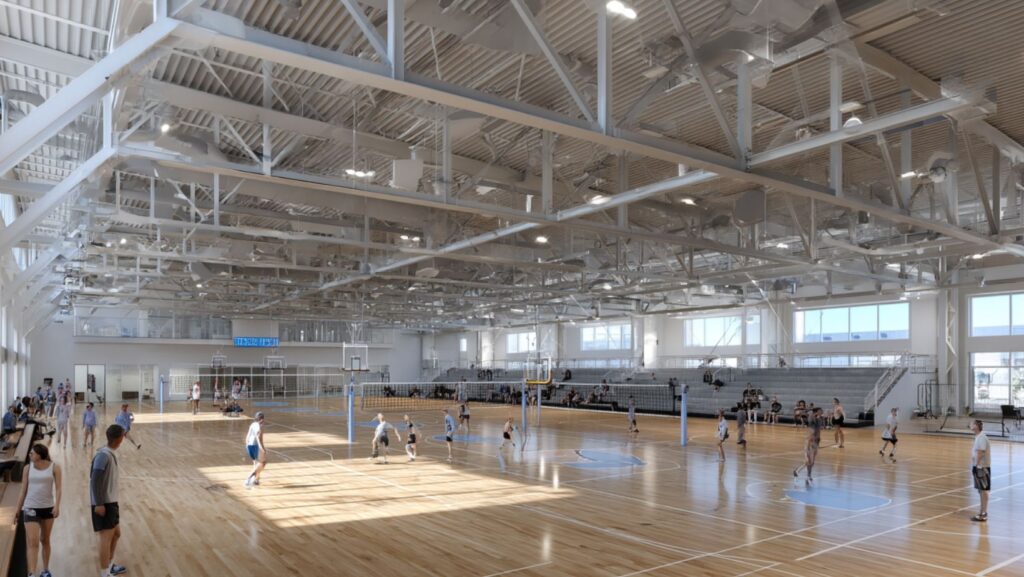
Key takeaways
- Good lighting design impacts safety, performance, as well as how your venue feels to everyone inside.
- Flexible zones and controls for outdoor use allow you to accommodate numerous sports and events without burning up energy.
- Lighting selections commit to energy costs and maintenance for ten years or longer.
- The advantage of planning early with a specialist to avoid costly rework on the building after it’s open.
Why Lighting Design is Important in Multi-Use Indoor Sports Complexes
If you are a manager for indoor sports, you know already when the light is just not right.
Players misjudge passes. A volleyball is lost in the rafters. Parents complain about not being able to see the scoreboard. I once walked to a new gym and the floor seemed to be bright, but the ball disappeared from over the backboard every time it went above that point. The coach said, “We had all of this money spent and it still doesn’t seem quite right.”
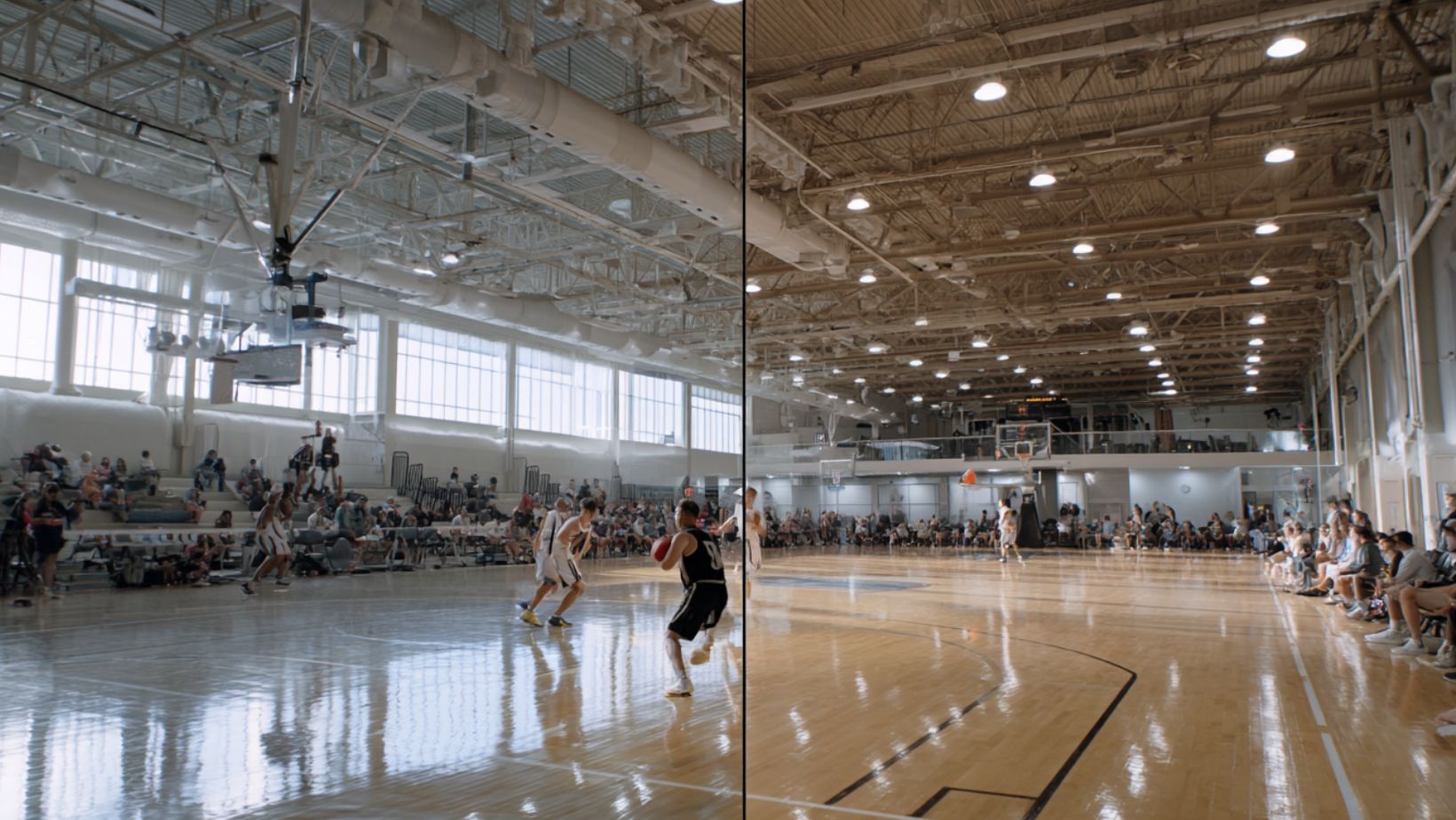
Close to Victory Truck drivers who have taken the driver safety course can take all the precautions to keep their driving results from being all logged crashes, bruises, and sprains without the frustration of dealing with a howler light headache.
Good vertical light is great for ball tracking/speed for basketball, volleyball and indoor tennis. Less glare prevents athletes from squinting during serves of headers. Spectators spend more time and money if they are able to comfortably follow the game.
You are not illuminating a box. You are affecting the way that people play, coach and watch every day.
Performance Criteria of Key Lighting for Indoor Sports
For indoor sports you need light, but the right light, with enough light, and in all the right places.
Light levels vary according to use. A casual practice of a basketball game might be okay in the ballpark of 300 lux and televised competition can be 750 lux or more. Indoor tennis and pickleball often require more vertical light for players to see the ball in the sky of the ceiling.
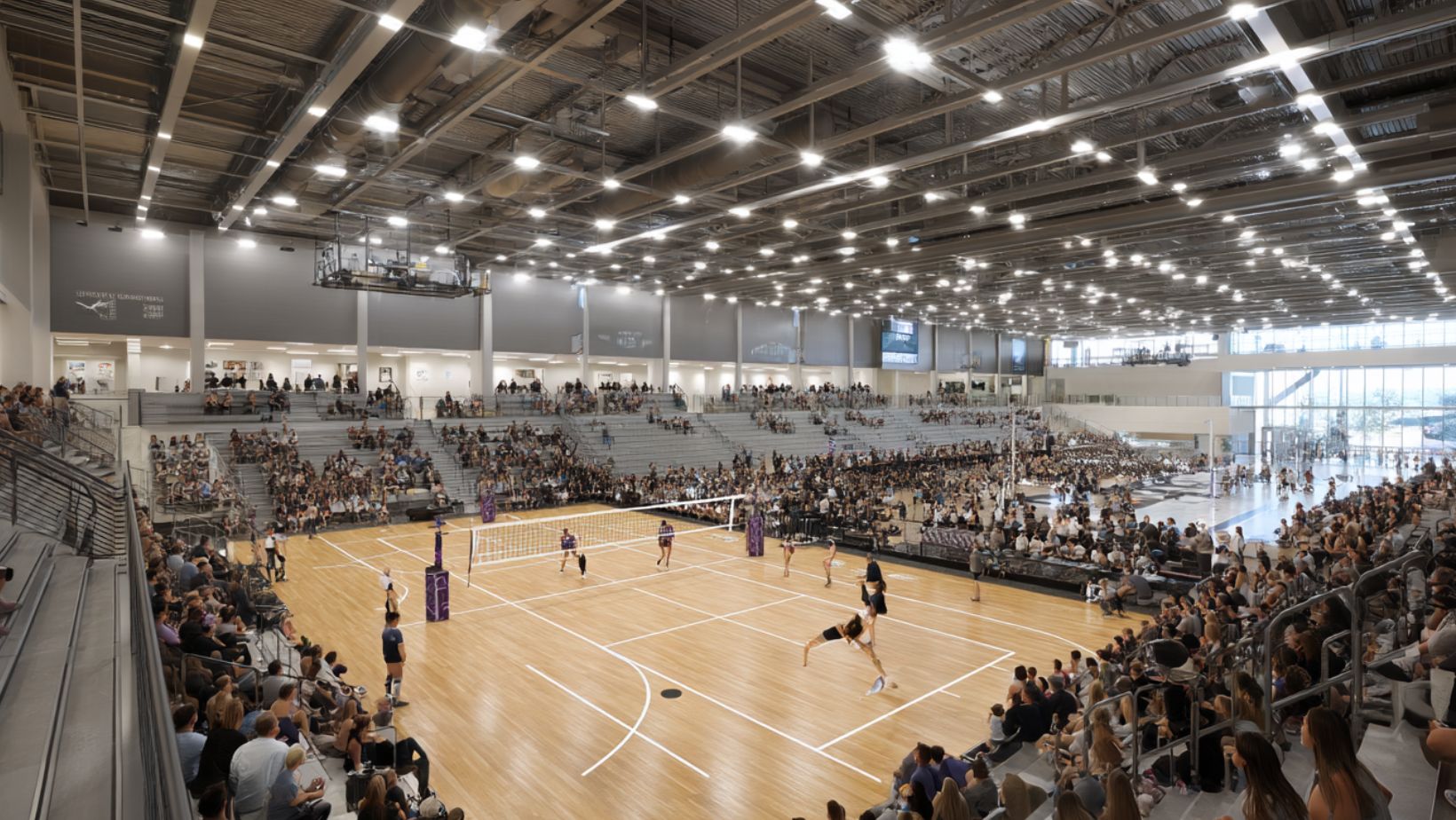
Uniformity of Light is as Important as Light Bright areas and dark corners inhibit fast reaction time. I saw one retrofitted court where we went from uniforming as bad as 0.4 to 0.7, and players were immediately spotting the difference that the game “felt easier”, whilst average lux changed surprisingly little.
You also require good color rendering for lines, balls and uniforms to stand out, tight control over glare and flicker (if you will be doing cameras and livestreams).
Lighting Design of a Multi-Use Interior Sports Facility
Before thinking about any fixture at all, get clear on how your building actually works.
List out your sports: Basketball, volleyball, futsal, indoor tennis, maybe indoor swimming pool or gymnastic area. Then ask, in five years time what should you add to this? I’ve seen schools only make it for basketball, then scramble when pickleball exploded, as well as club volleyball.
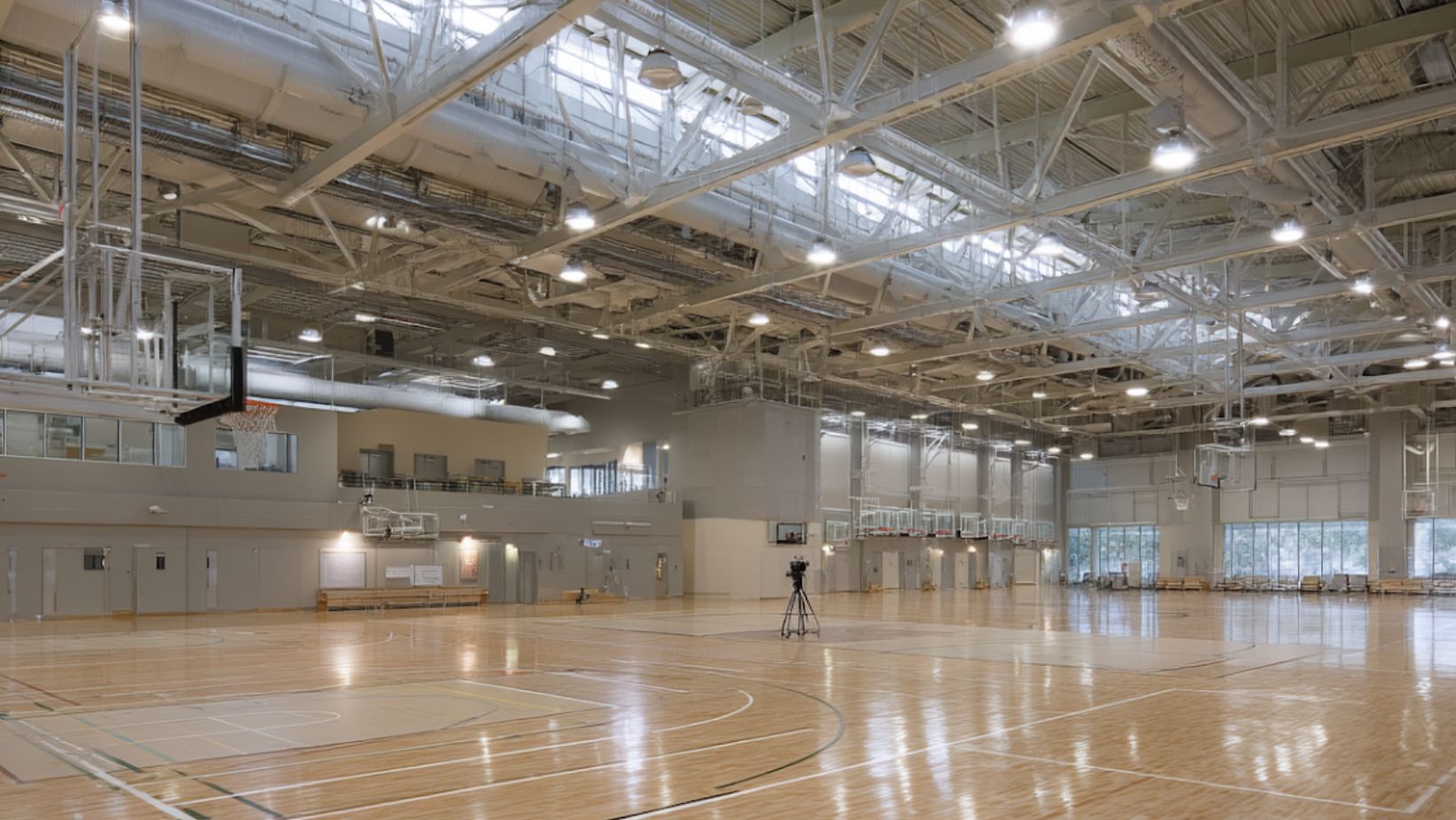
Think about events that are outside of indoor sports. Exams, assemblies, trade shows, even church services. Their lighting requirements are all different.
Measure the space in feet with a tape measure (walk through the space). Make note of ceiling height, beams, ductwork and wall colors. Dark ceilings eat light. Glossy floors at the ball is its reflection that bounces into the eyes.
Bring into the same conversation architects, MEP engineers, and operators early. The best projects I have seen lighting as part of the core design, and not a random late purchase order.
LED vs. Legacy Lighting for Indoor Sports Facilities
At many older sports facilities, metal halide or fluorescent light systems are still used. On paper they “work” but you pay for it on a day-to-day basis.
Metal halide requires warmup time and rebooting delay times. If the power goes out of your turbine at a tournament, you can sit in semi-darkness for minutes on end. Color changes over time i.e. one corner of the arena appears to be yellow and the other appears to be blue.
Modern led light changes the game. Instant on. No long warmup. Better optics that insure light on the court, not on the rafters. In one project, conversion to led fixtures resulted in a reduction of about 50 percent in lighting energy consumption and near elimination of the lift rental for replacing lamps.
The U.S. Department of Energy Guidance on Sports and Recreational Area Lighting supports the performance and energy efficiency benefits of LED systems in indoor facilities.
You still have to weigh things such as lumen output, optics, CRI and warranty, but the math, in terms of long-term use and money, is usually better for LED sports in busy indoor sports facilities.
Zoning, Controls and Flexibility Multi-Use Spaces
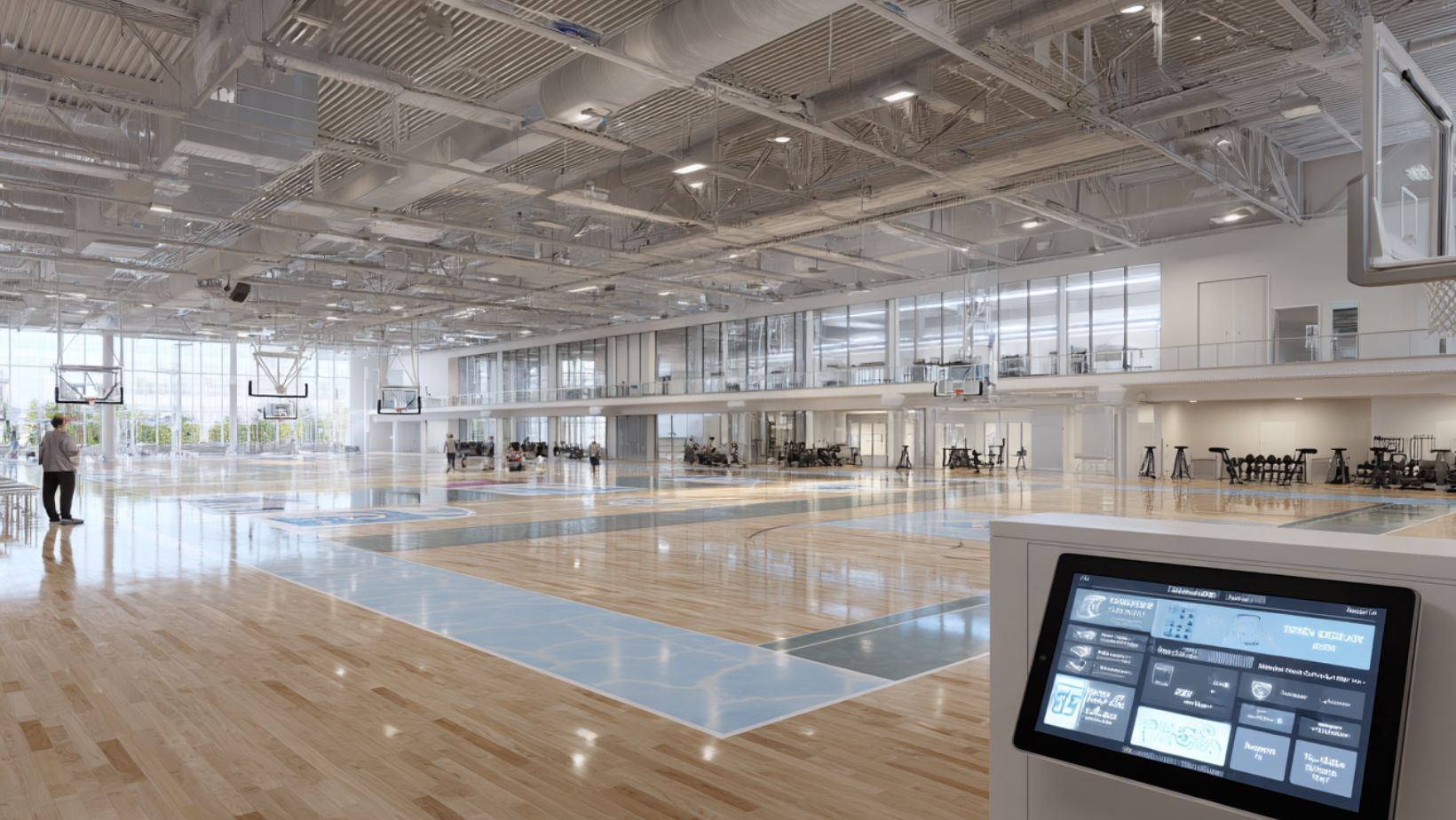
Multi-court gyms Live or Die by Zoning and Controls
And if one giant switch is going to turn everything on, you waste money lighting empty courts. I worked with a venue which had 8 courts on one circuit. They had a small practice on one court and they still brightly lit the entire hall. But after an upgrade in controls, they were able to operate two-court pods, and dim unused areas. Their bills dropped and presents loved by staff.
Good lighting control generates the ability to save scenes: practice, competition, tournament, exam, and cleaning. Staff tap a button instead of guessing breakers that they need to flip.
Tie schedules into league calendars. Occupancy sensors should be used in storage rooms, not on the main floor where surprise darkness will be dangerous.
Designing for Some Sports and Activities
Each of the sports see the light differently.
Basketball and volleyball require more vertical light and have players following the ball both beyond the rim and net. You want the fixtures placed where jump shooters and servers are not staring right in the glare like a staring contest winner. For indoor soccer and futsal the ball has a faster and longer distance traveled and the side lighting and end-zone coverage is more important.
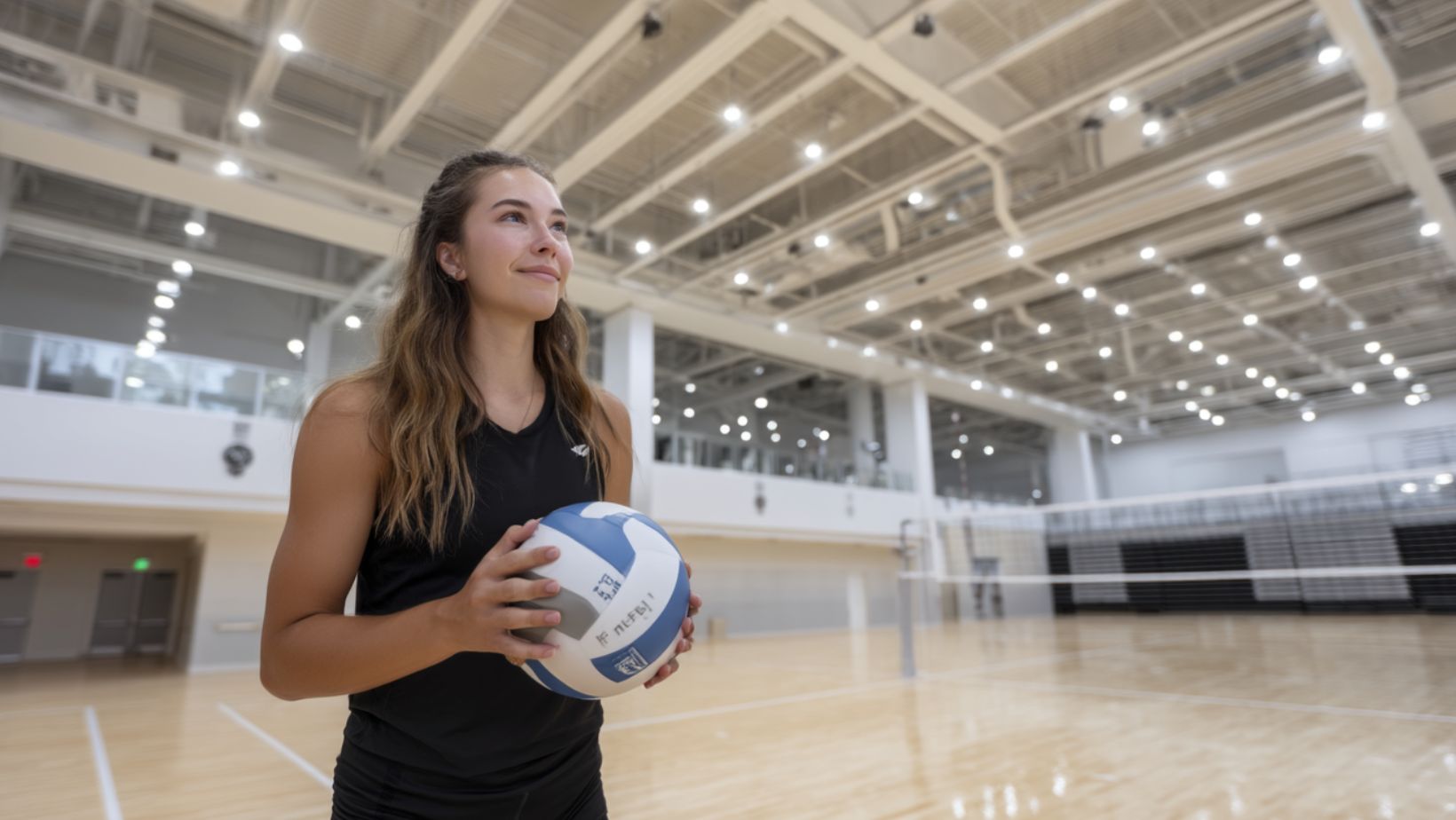
Indoor tennis and indoor tennis courts require discrete, carefully contrast backgrounds. A dark ceiling behind a bright ball helps, however it only works so long as you do not have direct views of fixtures on high lobs. Tennis court lighting that does not take this into account will result in frustrated players in no time.
Non-sport users add another plastic layer. Even, comfortable light on desks is required for exams. Concerts may require darkened scenes with strongly focused pools of light. The appropriate indoor design enables you to change from between these without rewiring.
Feasible Layouts of Internal Sports Lighting
Layout is where the theory connects with your actual building.
The height of the mounting is what makes almost everything. Higher ceilings enable you to use narrower supporting beams and to do better with the lighting, but make sure to keep the fixtures clear of ball impact areas. In low gyms, you might wish to have more fixtures, but with wider beams, to prevent hot spots.
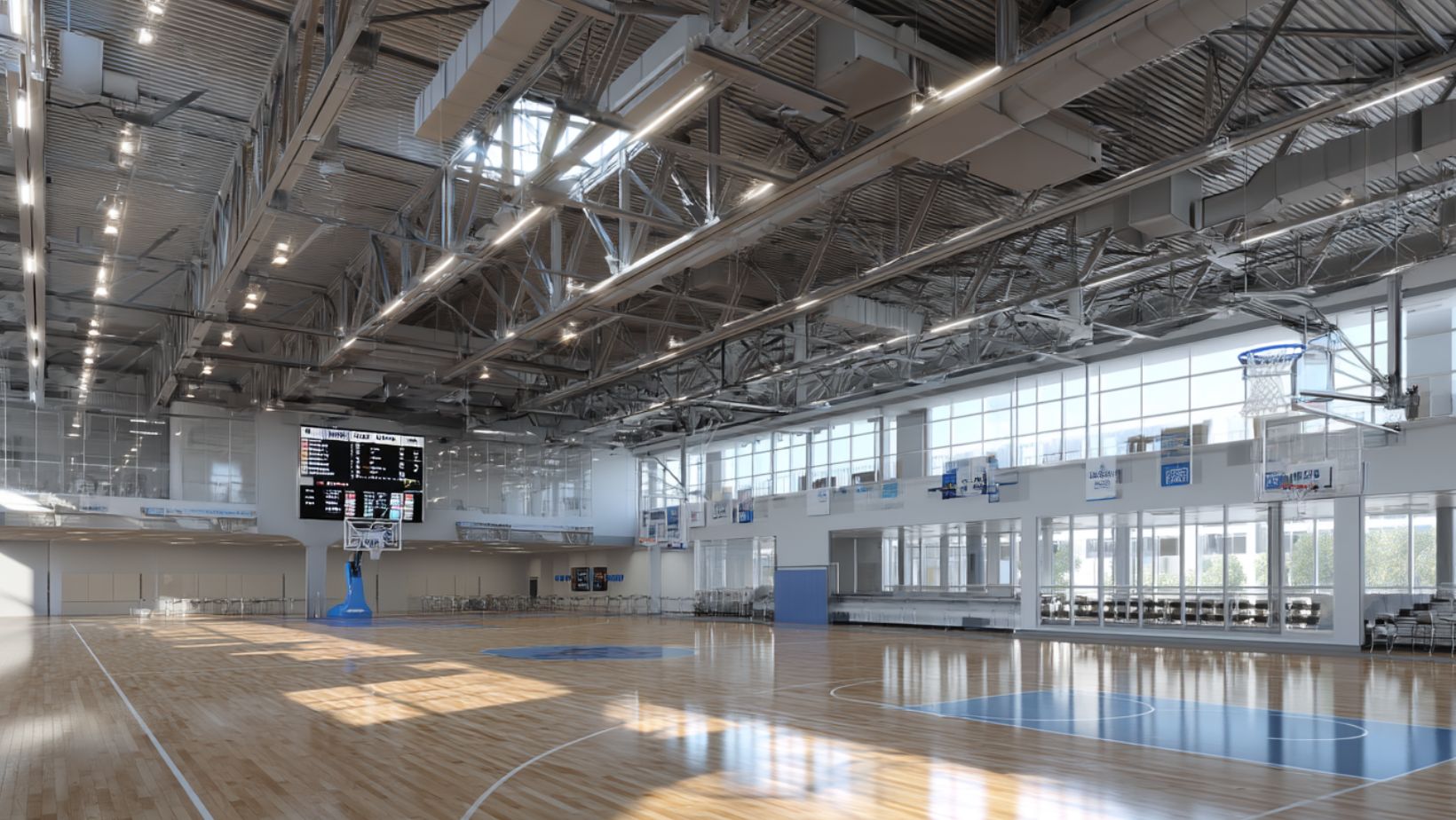
Think about sightlines. Do players, referees or cameras look directly into a row of lighting fixtures on big plays? I once saw a handsome bright basketball court with every free throw cast thrown at a blinding row of lights. On paper, it passed. In reality, players hated it.
Plan on the scoreboards, the video sleeves and the AV screens so you don’t have reflection and excessive contrast.
Compliance, Codes and Standards
You do not need to become a standards expert but you should know the basics.
The Illuminating Engineering Society’s RP-6-20: Recommended Practice for Sports and Recreational Area Lighting specifies, in detail, the illuminance, uniformity and glare requirements for various levels of play and sporting events. When you are referring to RP-6-20 while designing, you will be much more likely to use generally accepted professional standards rather than arbitrary rules of thumb.
Bodies such as IES and CIE have published recommended levels for training, competition and TV grade sports lighting. Local federations sometimes supplement the rules with their own. Choose a target that is suitable for you. It doesn’t make good sense to design a community gym out to full broadcast spec very often.
Building codes also call for emergency egress lighting and, in some cases, the back-up of emergency power for key areas. Referees and scorers require good clear-cut views of the action and paperwork.
Good projects complete with commissioning: checking on light levels, adjusting aiming and training of lighting system staff. I have seen facilities avoid failed inspections simply because they took the time (a day in this case) to do a proper job of commissioning.
Budgeting, Lifecycle Cost and ROI
Lighting is not just a line item, it is a long relationship.
Cheaper fixtures may look attractive in the short term but if they fail too quickly or fail to provide good uniform lighting then you incur costs of complaints, replacement and lost bookings. I usually encourage owners to look at 10 to 15 year costs: energy, maintenance costs and downtime.
A typical led sports lighting upgrade in busy sports facilities can result in a saving of 40 to 60 percent on lighting energy cost, depending on hours and controls. Add in fewer lift rentals and lamp changes and payback gets into a reasonable timeframe a lot of the time.
Do not forget rebates or grants for schools and municipalities. Good documentation and listed products are important here.
Retrofitting Existing Indoor Sport Facilities
Retrofitting has messy chores about it, but it can be very manageable with place-planning.
Start with a simple audit. Take a reading of light levels at some areas of each court (a few locations). Ask coaches and players what they hate the most, they would tell you dark corners, glare, buzzing ballasts or flicker on live streams. The answers they give serve as a guide for priorities.
Sometimes you can re-use old mounting points and wiring with new led light heads. Other times, especially in older arenas, it makes a lot of sense to rethink placement entirely. One complex I worked used to do the change in phases, court by court, between tournament weekends. Players noticed the difference immediately and continued to want to know when their court would be “next.”
Plan around your calendar so that you do not need to cancel key events.
Partnering with a Specialist: FSG Sports Lighting
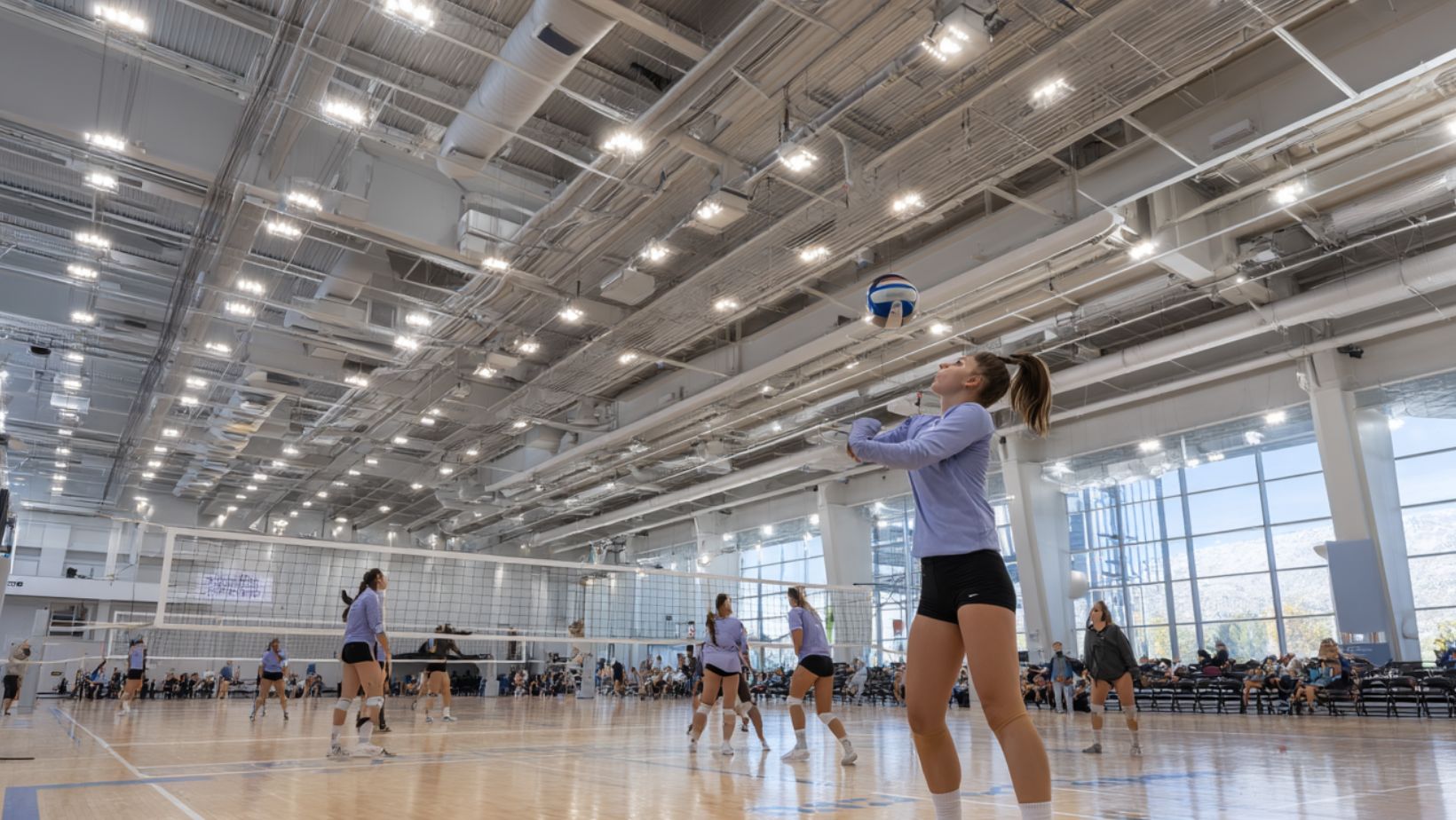
At one time or another you likely want some help from those that live and breathe lighting for sports.
A group like FSG sports lighting brings design tools, product knowledge, and field experience from many indoor sports facilities. They are able to model different scenes, evaluate possibilities, and show you how decisions will impact both on performance and cost.
On one project, FSG sports lighting helped a school district standardize across multiple gyms. Same controls, similar fixtures, some spare parts are similar. Staff training became easier and troubleshooting ceased to be a guessing game.
You still set the goals. The specialist only assists them with lesser surprises.
Common Mistakes in Designing Sports Lighting Indoor
I see the same mistakes repeat themselves.
Designing only for one sport in a multiuse hall limits programming in the future. Ignoring glare with “the numbers look fine” means constant complaining. Skipping controls leaves you stuck in the all or nothing lighting.
The greatest trap is going for the lowest pricing of your fixture without looking at the optics, warranty and support. You might pay a little now and pay more for it later in frustration.
Ask yourself: will this still seem like the right light for my building in 10 years?
Step-by-Step Process to Get the Right Lighting design
You can keep the process simple and structured.
Looking at your examples, first list your sports/events/target standards. Second, record your space by its dimensions, photos of your space, and existing gear. Third, communicate that to a designer or contractor and work through them on the layout options.
From there, Budget, Phasing and Schedule Lock-in. Install, commission and train staff at scene and simple troubleshooting. At the end of a season, look into feedback and energy data. Adjust presets where needed.
Good indoor sports lighting is not perfect on day one. It is about giving yourself a system that you can tune over time as you need for your lighting to change.
More Stories
Planning a Major Backyard Renovation: From Fencing to Outdoor Lighting
How Stainless Steel Supports Modern Industry and Manufacturing
Prevailing Wage Compliance for Contractors Bidding Federal Work for the First Time