
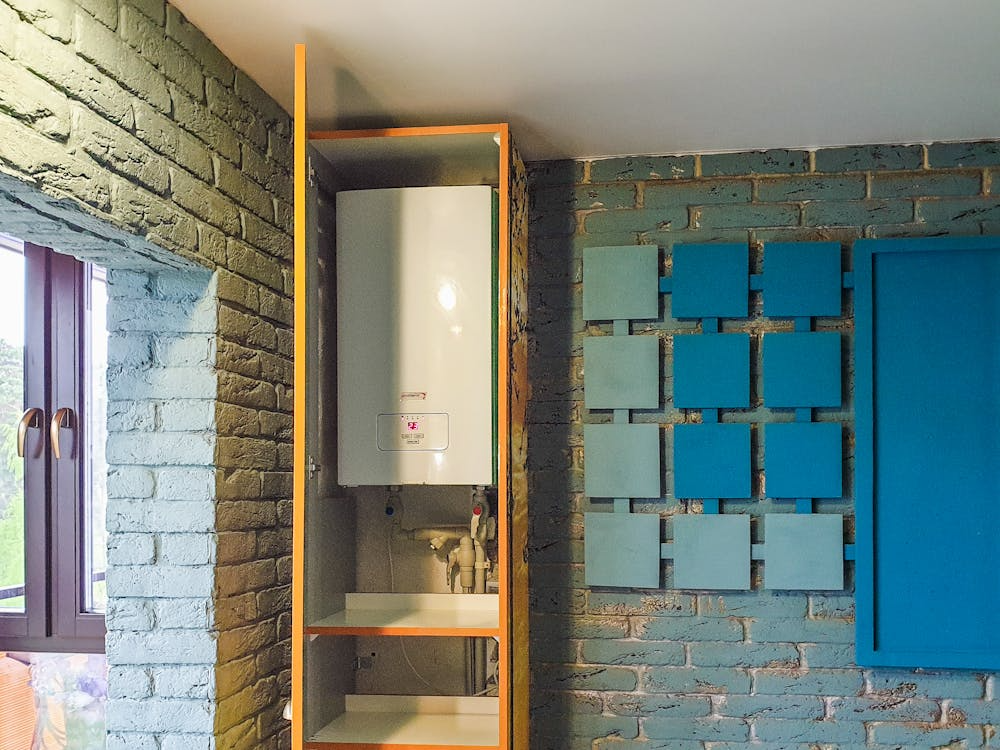
Water heaters aren’t something most homeowners spend much time thinking about. Usually, the first you know something’s wrong with your water heater is when it’s too late.
There were signs. Troubling sounds, rust coloured water, or even an actual puddle of water on the floor. Something was wrong but knowing what you’re looking for is half the battle.
Knowing when water heater replacement is necessary is key for every homeowner. Figuring out when it’s time to replace your water heater before it completely gives out is one of the best ways to protect a home. It keeps costs predictable and manageable and can help avoid waking up to a basement or crawlspace filled with water.
Learn how to understand those warning signs…
What You’ll Learn
- How Long Should A Water Heater Last?
- Warning Sign #1 – Rust & Discoloured Water
- Warning Sign #2 – Strange Rumbling Noises
- Warning Sign #3 – Leaks and Pooling Water
- Warning Sign #4 – Inconsistent Hot Water Temperatures
- Warning Sign #5 – Rising Energy Bills
- Age Matters – When To Replace Regardless
How Long Should A Water Heater Last?
First, here are some baseline expectations…
According to the International Association of Certified Home Inspectors, the average gas water heater lasts around 10 years before failing. Tank-style water heaters generally last somewhere between 8–12 years. Tankless water heaters can last even longer with proper maintenance at 15–20 years.
There is no such thing as a “lifetime” water heater.
Once a water heater starts pushing double-digit ages it’s time to pay attention to the following signs. Not dismiss them and hope they go away.
Warning Sign #1 – Rust & Discoloured Water
Grab a glass. Turn on the hottest water tap in the home and fill it up.
What colour is the water?
If it’s brownish or yellowish there’s a serious problem. Rust coloured water is almost always an indication of one of two things:
- Rust inside the tank — the steel tank lining is rusting from the inside out
- Failing anode rod — the rod that helps prevent corrosion has given out
Here’s the unfortunate truth…
A water tank that has started to rust on the inside cannot be repaired. Once it starts, it’s only a matter of time before the rust spreads and the tank fails. And when it fails from rust, it’s highly likely to leak or burst.
Don’t guess when it comes to rusty water coming from the tap. It’s water heater replacement time.
Warning Sign #2 – Strange Rumbling Noises
POP! Crackling. Rumbling. Bang!
What noises are those? If there’s a water heater nearby, chances are they’re coming from it.
Any popping or rumbling noises from a water heater are not normal. What’s happening is sediment — minerals from the water supply — has hardened and accumulated on the bottom of the tank.
As the water heater heats the sediment, it expands and moves around. That is what you are hearing.
Why does that matter?
- The heating element needs to work harder and use more energy
- Energy efficiency decreases
- Heating the sediment causes the bottom of the tank to overheat and wear out faster
- Leaks develop
Flush the water heater to try and remove the sediment buildup. If the rumbling persists after the flush? Consider that the tank has been weakened and start thinking about water heater replacement.
Warning Sign #3 – Leaks and Pooling Water
If there’s a puddle on the ground around a water heater, stop what you’re doing and investigate.
Even if it’s just a little bit of water on the floor, there’s a problem. Leaks can come from:
- Pressure relief valve / drain valve — often easily repaired by replacing the broken part
- Loose pipe connections — an easy fix
- Leak from the tank itself — this means the tank has either cracked or corroded through
Rule of thumb… if water is trickling from the tank body itself, it’s game over. Water heaters cannot be repaired once they start leaking from the tank body. Plus, the last thing anyone wants is to deal with the mould that comes with ignoring water damage. Water damage claims average $13,954 according to the Insurance Information Institute. Yikes!
If water is found on the floor around a water heater, call a plumber right away.
Warning Sign #4 – Inconsistent Hot Water Temperatures
Running out of hot water used to be a thing of the past. Now it’s just another annoyance of modern life.
If hot water is running out when it shouldn’t be, it’s a sign the water heater can’t keep up.
Common issues include:
- Failing heating element (electric heaters)
- Burner assembly giving out (gas heaters)
- Too much sediment built up in the tank
- Incorrect thermostat
Some are easily fixed. But if a water heater is getting up there in years (8–10+) and other warning signs are starting to appear, it’s probably time to consider water heater replacement.
Warning Sign #5 – Rising Energy Bills
Here’s a sneaky one that shows no physical symptoms.
Water heaters lose efficiency as they get older. The system has to work harder to heat the water. Sediment insulates heating elements away from the water. Wear and tear means parts don’t work as well as they used to.
The end result? Energy bills slowly but surely climb each month.
It’s worth noting that fewer than 20% of homeowners take precautionary steps to protect their homes from water damage and appliance failure. Monitoring a water heater’s health is one of those steps worth taking.
If a monthly energy bill has increased for no clear reason, the water heater is worth examining next.
Age Matters – When To Replace No Matter What
Age is just a number. But when it comes to water heaters, that number matters.
If a water heater is 10 years old or more, start thinking about replacement.
Not because it will definitely need replacing this month. But because any water heater over 10 years old is more likely to fail suddenly — like the night of the biggest game of the year.
Ask these questions:
- Is the water heater 10+ years old?
- Does the water run discoloured when the hot water is turned on?
- Are there popping or rumbling noises?
- Is there moisture or water pooling on the ground around the water heater?
- Have energy bills gone up for no apparent reason?
- Has the hot water been running out too quickly?
If the answer is yes to 2 or more of these questions, call for water heater replacement service.
Stop Guessing and Start Saving
Understanding water heater warning signs should be simple.
Rust coloured water, rumbling noises, water leaks and inconsistent hot water are all clues that it’s time to move on. Spotting the signs early allows for control over when the water heater gets replaced — instead of calling for expensive emergency water heater replacement service.
More Stories
How to Clean Household Spills Safely and Effectively
How to Make a Small Living Room More Comfortable After Dark
How a New Deck Adds Value to Your Home