
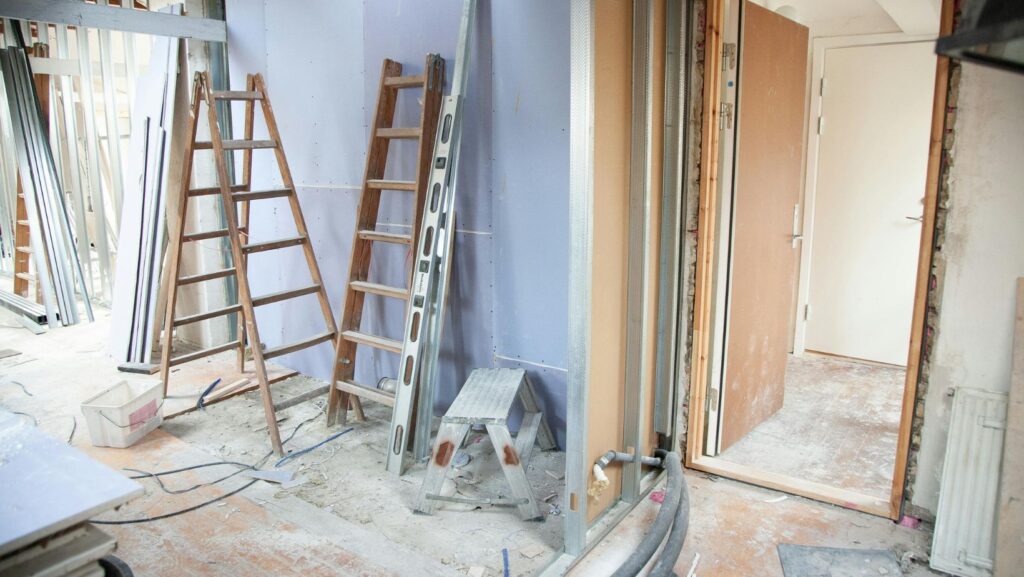
You want to renovate your home but are uncertain about your financing options?
Home renovation projects can refresh your living space and increase your home’s worth while obtaining financial resources for these projects remains challenging. Several financing options are available to help you fund your home projects even when you have less than perfect credit.
In fact, with the right approach, you can obtain loans with bad credit and still make your renovation dreams a reality without breaking the bank.
This guide will examine intelligent methods for extracting equity from your home to finance essential upgrades.
What you’ll discover today:
- Understanding Home Equity Financing Options
- Choosing the Right Loan for Your Project
- Smart Strategies for Bad Credit Borrowers
- Maximizing Your Home Improvement ROI
- Avoiding Common Financing Pitfalls
Understanding Home Equity Financing Options
Home equity serves as a strong financial resource for funding your home renovations. Your home equity represents the gap between your home’s market value and the remaining balance on your mortgage.

These primary methods provide access to your home’s equity:
- Fixed-rate home equity loans provide a single lump sum borrowed against your home equity.
- Home Equity Lines of Credit (HELOCs) provide better flexibility since you have the option to borrow funds as required and only in necessary amounts.
- Cash-Out Refinancing allows you to get cash by replacing your current mortgage with one of higher value.
- Homeowners who are at least 55 years old can turn their home equity into cash without needing to sell through reverse mortgages.
The latest information indicates HELOC balances grew by 0.3% or $0.5 billion in January 2025 which points to homeowners exercising caution in accessing their home equity.
Choosing the Right Loan for Your Project
Different projects require different financing approaches. On smaller projects costing less than $10,000 you can use personal loans or credit cards with special interest rates.
Home equity loans and HELOCs stand out as the best choices for medium-sized remodeling projects that cost between $10,000 and $50,000. When undertaking major renovations that exceed $50,000 in cost homeowners should explore cash-out refinancing because it delivers the most competitive rates.
Consider these factors when deciding:
- Project Size and Cost: Larger projects can take advantage of home equity options because they offer reduced interest rates.
- Timeline: Need all funds upfront? A home equity loan might be best. Phased renovation? Consider a HELOC.
- Interest Rates: Fixed-rate loans ensure stable payments while variable rates begin lower but have the potential to vary over time.
- Tax Benefits: Home equity product interest rates may qualify as tax-deductible expenses when used for home improvement purposes.
- Your Credit Profile: You have options available if your credit score isn’t perfect.
The true cost for borrowing becomes clear when you compare loans using the annual percentage rate (APR) because it includes all fees, not just the interest rate. Think about the length of time for loan approval and how your borrowing fits into your future financial plans.
Smart Strategies for Bad Credit Borrowers
Bad credit does not automatically disqualify you from obtaining funds for home improvements. Consider these options:
- FHA 203(k) Rehabilitation Loans: These government-backed loans merge mortgage and renovation expenses and offer flexible credit requirements.
- Credit Union Options: Member-owned financial institutions typically evaluate your total financial situation rather than focusing solely on your credit score.
- Online Lenders: Numerous online platforms specialize in lending services for borrowers who face difficulties with credit.
- Secured Loan Options: Improving loan approval chances becomes likely when borrowers pledge vehicles or investments as collateral.
- Co-Signer Arrangements: A co-signer with a strong credit score can significantly boost your loan approval prospects.
- Home Improvement Grants: Government grants available for energy-efficient renovations may offer financial assistance that doesn’t require repayment to eligible applicants.
Lenders typically give greater importance to your debt-to-income ratio compared to your credit score. Lenders may approve your loan application if you demonstrate adequate income to cover payments regardless of past credit problems. Begin with small renovation projects to strengthen your credit score before you undertake major renovations.
Maximizing Your Home Improvement ROI
Every home improvement project does not contribute the same amount of value to your property. Industry specialists have found that these home improvements deliver the highest return on investment.
- Kitchen Renovations: Kitchen improvements that fall into the moderate category usually pay back between 75% and 100% of their initial expenses.
- Bathroom Updates: Can return 60-80% of costs.
- Energy Efficiency Upgrades: Energy efficiency upgrades help you save on utility bills while allowing you to recover 50-90% of your initial investment.
- Deck or Patio Additions: Return 60-90% of their investment.
- Basement Finishing: Returns 70-80% of costs.
Personalized renovations such as swimming pools tend to fall short of their full investment value but offer significant lifestyle advantages.
To maximize your ROI:
- Focus on projects that address functional problems
- Avoid over-improving for your neighborhood
- Get multiple quotes for materials and labor
- If you possess the necessary skills try implementing DIY solutions on certain parts of the project.

The quality of workmanship significantly affects ROI. When renovations are done poorly they can lower your home value which is why you should research contractors and avoid picking the cheapest option.
Avoiding Common Financing Pitfalls
Watch out for these common mistakes:
- Underestimating Costs: Most renovations cost 10-20% more than estimated. Build this buffer into your financing plan.
- Borrowing Too Much: Assess how much you can manage to pay monthly for renovations without overburdening yourself with both mortgage and renovation costs.
- Ignoring Fine Print: Ensure you understand prepayment penalties and review balloon payments along with variable rate caps.
- Overlooking Tax Implications: Certain loans offer tax advantages but other loans lack these benefits.
- Contractor Financing: These financing options typically come with interest rates that exceed what you would pay if you borrowed money on your own.
- Misusing Credit Cards: The substantial interest rates of credit cards make them inappropriate for financing significant renovation projects.
- Neglecting Insurance: Home insurance requirements may change after completing major renovation work on your property.
Even well-informed homeowners are vulnerable to these financial pitfalls. The client who received approval for a $75,000 HELOC borrowed $40,000 which turned out to be a smart decision after plumbing problems cost them an additional $15,000.
A homeowner nearly committed to a 12% contractor financing deal but later qualified for a 7% home equity loan which would have prevented over $10,000 in extra interest charges.
The Bottom Line on Renovation Financing
Selecting suitable financing options remains an achievable task that does not need to be overwhelming. HSBC Bank Canada along with Tangerine Direct Bank National Bank of Canada First Ontario Credit Union and B2B Bank lead the Canadian home equity lending market yet smaller lenders frequently provide competitive products that deserve consideration.
Smart financing combined with strategic planning leads to the highest success rates in home renovations. Before entering into any agreements you should research multiple options and gather several quotes to create a detailed budget. When you plan your financing stage with precision you ensure a more seamless project execution.
A well-planned approach will enable you to improve both your living space and your property’s long-term value.
Which home improvement project stands at the top of your upcoming to-do list? A perfect financing solution exists within reach of a simple conversation.
More Stories
Crucial Questions To Ask a Home Buying Company Before You Sell Your Property!
Silent Mechanisms: Toward A Theory Of Financial Behaviour In Decentralised Economies
Why Coastal Villas Are Becoming the Famous Choice for Property Investors in Thailand